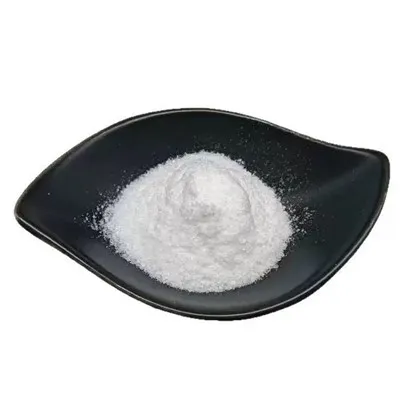
As a sucralose supplier deeply entrenched in the industry, I am thrilled to take you on a journey through the intricate production process of sucralose. This artificial sweetener has revolutionized the food industry with its zero – calorie profile and intense sweetness. Understanding its production is not only fascinating but also crucial for those in the food and beverage business looking to source high – quality sucralose. Sucralose
Starting Materials
The production of sucralose begins with a common and readily available starting material: sucrose, which is ordinary table sugar. Sucrose is a disaccharide composed of glucose and fructose units. It is a natural product that can be sourced from sugarcane or sugar beets. The choice of high – quality sucrose is of utmost importance as it forms the foundation for the sucralose synthesis. The purity of the starting sucrose can significantly impact the final quality and yield of sucralose.
Protection of Hydroxyl Groups
The first major step in the conversion of sucrose to sucralose is the protection of specific hydroxyl (-OH) groups on the sucrose molecule. Sucrose has multiple hydroxyl groups, and the goal is to selectively modify only certain ones to create sucralose. This is achieved by reacting sucrose with acetic anhydride in the presence of a catalyst. The reaction results in the acetylation of most of the hydroxyl groups, forming a per – acetylated sucrose derivative. This protection step is essential because it allows for the subsequent selective chlorination of the desired positions on the molecule.
Chlorination
After the protection of the hydroxyl groups, the next critical step is chlorination. Chlorination is the process of introducing chlorine atoms into the molecule. In the case of sucralose production, three specific hydroxyl groups on the sucrose molecule are replaced with chlorine atoms. This is typically done using a chlorinating agent such as thionyl chloride or phosphorus oxychloride. The reaction conditions, including temperature, pressure, and reaction time, need to be carefully controlled to ensure the correct substitution pattern. A well – controlled chlorination reaction will lead to a high – quality sucralose product with the desired sweetness profile.
The chlorination reaction is a complex chemical process. The chlorine atoms replace the hydroxyl groups at specific positions on the sucrose molecule, which are positions 4, 1′, and 6′. This specific substitution pattern is what gives sucralose its unique properties. It is several hundred times sweeter than sucrose, yet it has virtually no calories. The difference in the chemical structure between sucrose and sucralose means that the human body does not metabolize sucralose in the same way it does table sugar.
Deprotection
Once the chlorination is complete, the next step is deprotection. The acetyl groups that were added during the protection step need to be removed to reveal the final sucralose molecule. This is accomplished by treating the chlorinated, acetyl – protected intermediate with a base. The base hydrolyzes the acetyl groups, converting them back to hydroxyl groups, except for the three positions where chlorine atoms were introduced. After deprotection, the resulting product is crude sucralose.
Purification
The crude sucralose obtained from the deprotection step contains various impurities, including unreacted starting materials, by – products of the reactions, and residual solvents. Purification is a multi – step process that is essential to obtain high – purity sucralose suitable for use in the food and beverage industry.
The first purification step often involves crystallization. Sucralose is dissolved in a suitable solvent, and then the solution is cooled or concentrated to induce crystallization. Crystallization helps to separate sucralose from many of the impurities because the sucralose molecules form ordered crystals while the impurities remain in the solution.
After crystallization, further purification may be carried out using chromatography techniques. Chromatography separates different components in a mixture based on their physical and chemical properties. For sucralose purification, techniques such as column chromatography or high – performance liquid chromatography (HPLC) may be used. These methods can effectively remove any remaining trace impurities, ensuring that the final sucralose product meets the strict quality standards required for food applications.
Quality Control
Throughout the production process, strict quality control measures are in place. At each step, samples are taken and analyzed to ensure that the reaction is proceeding as expected and that the intermediate products meet the required specifications. For example, during the chlorination step, the degree of chlorination is monitored to ensure that exactly three chlorine atoms are substituted at the correct positions.
Once the final sucralose product is obtained after purification, it undergoes a comprehensive battery of tests. These tests include assays for purity, identity, and sweetness. Purity is typically determined using techniques such as HPLC, which can accurately measure the amount of sucralose in the sample and detect any remaining impurities. Identity tests, such as infrared (IR) spectroscopy and nuclear magnetic resonance (NMR) spectroscopy, are used to confirm that the product is indeed sucralose with the correct chemical structure. Sweetness tests are also conducted to ensure that the sucralose has the expected level of sweetness, usually several hundred times that of sucrose.
Packaging and Storage
After passing all the quality control tests, the sucralose is ready for packaging. It is typically packaged in sealed containers to protect it from moisture, light, and air, which could potentially degrade the product over time. The packaging materials are chosen carefully to ensure their compatibility with sucralose. For example, high – density polyethylene (HDPE) containers are often used as they provide a good barrier against moisture and are chemically inert with respect to sucralose.
Proper storage conditions are crucial for maintaining the quality of sucralose. It should be stored in a cool, dry place away from direct sunlight. Under the right storage conditions, sucralose has a relatively long shelf – life, which makes it a convenient ingredient for food and beverage manufacturers.
Why Choose Our Sucralose?
As a sucralose supplier, we take great pride in our production process. Our state – of – the – art facilities are equipped with the latest technology and adhere to the highest industry standards. We source the purest sucrose as our starting material, which is the first step in ensuring the quality of our sucralose. Our team of experienced chemists and technicians carefully monitor each stage of the production process, from the protection of hydroxyl groups to the final purification steps.
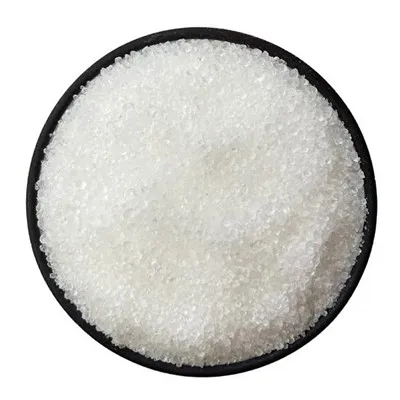
We understand that the food and beverage industry has strict requirements when it comes to ingredients. That’s why our sucralose product undergoes rigorous quality control testing. We guarantee a high – purity product that meets all relevant safety and quality regulations. Whether you are a large – scale food manufacturer or a small – batch artisanal producer, our sucralose can provide the sweetness you need without the calories.
Colorants If you are in the food or beverage business and are looking for a reliable sucralose supplier, we invite you to contact us for a procurement discussion. We can provide you with samples of our sucralose so that you can test its quality and performance in your products. Our team is also available to answer any questions you may have about the production process, the properties of sucralose, or how it can be incorporated into your formulations.
References
- "Sweeteners and Sugar Alternatives in Food Technology", edited by George Reineccius.
- Journal articles on sucralose synthesis and production in "Journal of Chemical Technology and Biotechnology" and "Food Chemistry".
Fudijia (Tianjin) Supply Chain Co., Ltd.
With abundant experience, we re one of the most professional sucralose manufacturers and suppliers in China. We warmly welcome you to wholesale bulk high quality sucralose made in China here from our factory. For more information, contact us now.
Address: 301-2-1C,Jin Bin Jie Zuo,No.98, Huanghai Road,TEDA, Tianjin, China
E-mail: foodchem@hjlfoods.com
WebSite: https://www.ifoodchem.com/
