Hey everyone, if you’ve ever stopped to check out the electric cargo flatbeds rolling through your city making deliveries, you might’ve noticed a question fly through your head: how do these things handle all that heat when they’re hauling heavy loads all day, especially in summer? As someone who’s been selling 4-wheel electric cargo flatbeds for the last 5 years, I get asked this nonstop—most folks assume, “It’s electric, so it just runs on batteries, right?” Nope, not even close. The cooling system is the unsung hero that keeps these trucks moving, and it’s way smarter than the old AC setup you might remember from gas-powered vans. Let me break this down like I would to a new customer who just test drove one of our flatbeds last week. 4-Wheel Electric Cargo-Flatbed
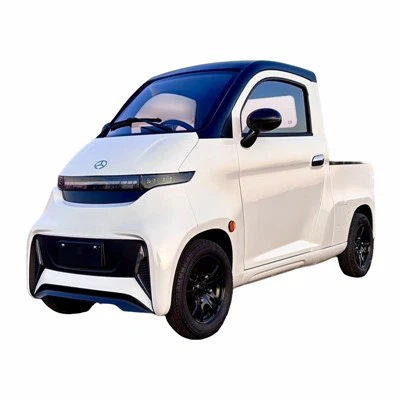
First off, let’s get one thing straight: our electric cargo flatbeds don’t just have one cooling part. We have a whole network working together, and it’s all tailored to how these trucks actually get used. Unlike a regular car that sits in traffic for 10 minutes at a time, our flatbeds are out making stops every 15 minutes, hauling 2,000 lbs of packages, groceries, or even small construction materials from dawn till dusk. That means the cooling system can’t be big and bulky—it has to be lightweight, efficient, and not waste battery power, because every extra watt we use for cooling is less power for your haul.
Let’s start with the main cooling loop, the one that keeps the battery and motor from turning into a molten mess. Electric trucks run on a permanent magnet synchronous motor (PMSM) most of the time, and that motor produces a ton of heat when it’s pushing 4,000 lbs of truck plus cargo up a slight hill, or doing multiple stop-and-go runs in 90-degree heat. If that motor gets too hot, its magnets lose strength, and suddenly you’ve got 20% less power to haul your load. Same with the lithium-ion battery—lithium-ion hates heat, even more than it hates being fully drained. If the battery’s internal temp goes over 110°F, its lifespan drops by almost half, and nobody wants to replace a $15,000 battery every two years.
Our cooling system here is a liquid-to-air closed loop, no open water or anything like that. It’s basically a small radiator tucked behind the front grille, same as a gas van, but way smaller—we saved space by ditching the big engine. The loop has ethylene glycol coolant (but a special electric-grade mix that doesn’t corrode the motor or battery components) that flows through tiny channels wrapped around both the motor’s stator and the battery’s cooling plates. When the motor or battery is working hard, they heat up, so the coolant absorbs that heat. Then a small, low-power electric pump pushes the hot coolant through the radiator, where a variable-speed fan blows air over the radiator’s fins to cool the liquid back down. The fan doesn’t just run full blast all the time—we have temperature sensors in the motor, battery, and even the cab that tell the fan, “Okay, motor’s at 105°F, kick the fan to 70% speed; battery’s only at 95°F, keep it low.” That saves battery, which is huge for delivery routes that go 100 miles a day.
Wait, but what about the cab? Delivery drivers are in that seat for 10 hours straight, right? They can’t work if it’s 100 degrees in the cab. So our flatbeds have a separate, mini AC cooling system that’s tied into the same network, but it doesn’t steal power from the main motor/battery loop. A lot of cheaper electric delivery trucks use the same coolant loop for both cab AC and powertrain cooling, which is fine until your driver cranks the AC on high during a hot day, and suddenly your motor can’t cool down enough. Ours splits it: the cab AC has its own compressor and evaporator, but it’s powered by a 12V auxiliary battery, not the main traction battery. That means the driver can stay comfy without messing with the powertrain’s cooling. We also add a little cross-flow vent between the cab and the cargo hold, so if you’re hauling temperature-sensitive stuff like refrigerated meds or food, you can hook up a small, low-power vent that pulls cool air from the cab to the cargo area—no need for a separate refrigeration unit that drains power.
Another big thing I get asked: what happens if it’s super hot, like 100°F in Phoenix, and the truck’s been sitting outside for 8 hours before a route? The cooling system has a pre-cooling feature. You can plug the truck into a charger at the depot overnight, and set a timer on the app or the dash to pre-cool the battery and motor to 70°F 15 minutes before you leave. That way, you don’t start your route with a warm battery, which means you get better range and less wear on the components. We added that after a customer in Arizona told us his old electric van would lose 25 miles of range if he left it sit in the sun all day. Pre-cooling fixes that by using grid power instead of the truck’s battery to keep the components at the perfect temp.
Wait, let’s talk about common myths I hear from folks who used to drive gas delivery vans. A lot of them say, “I don’t need a cooling system, I just let the truck idle to cool down.” But our electric flatbeds don’t idle—they shut off when you’re not moving, and idling would waste battery anyway. So the cooling system has to work while the truck’s moving and even when it’s stopped. That’s why we use variable-speed fans and pumps that draw power only when needed. If you’re sitting at a stoplight for a minute, the fan doesn’t stay on high—it just keeps the coolant at the right temp. If you’re moving down the highway at 50 mph, the air flow over the radiator is enough that the fan can actually turn off, saving power. We tested this in 100°F heat, and the cooling system only uses about 3% of the total battery power on a full route. Compare that to a gas van’s AC, which uses 10-15% of your fuel, and it’s a no-brainer.
I should also mention the little details we’ve tweaked over the years to make the cooling system more reliable. Last year, we noticed that some customers who hauled super heavy loads (like 3,000 lbs of construction materials) were pushing the motor harder, so we upgraded the cooling channels on the motor from 5mm to 7mm, which let more coolant flow through. We also added a filter on the coolant loop, so dust and gunk from city streets don’t build up in the radiator fins. That’s a big one—if the radiator gets clogged, the cooling system doesn’t work, and you’re stuck on the side of the road. All our flatbeds have a sensor that sends a warning to the dash if the radiator’s getting too clogged, so you can clean it at the depot before it becomes a problem.
Now, let’s address when this cooling system might have issues, because no system is perfect. The biggest thing is keeping the coolant at the right level. If you get a leak from a loose hose, the loop won’t have enough liquid to absorb heat, and components can overheat. That’s why we do a full coolant check at every 10,000 mile service, and we tell all our customers to check the reservoir level once a month, especially before long routes. Another issue is extreme cold—wait, did I forget that? In freezing weather, the cooling system actually has a heating element built in, so the coolant doesn’t turn to ice, which would crack the motor’s cooling channels. It’s a dual system: cools when it’s hot, heats when it’s cold. That’s something most people don’t think about, but our customers in Minnesota swear by it, because their old electric trucks would stop working in 10°F weather because the battery got too cold.
As a supplier, I’ll be honest: we don’t cut corners on the cooling system, because that’s what makes our flatbeds worth buying. A lot of budget electric flatbed makers skimp on the cooling to save money, and their customers end up with broken motors or dead batteries after a year. I’ve seen that too many times—last year, a guy came to us because his $20,000 electric flatbed’s motor died after 18 months, and the cooling system was so small it couldn’t handle summer heat. We built our cooling system to handle up to 115°F, which is hotter than almost any delivery route in the US, and it’s been tested for over 5,000 hours of continuous use.
If you’re here because you’re looking to buy an electric cargo flatbed for your delivery business, or you’re just curious about how these things work, know this: the cooling system isn’t just a box of parts—it’s the reason these trucks can run all day without breaking down. It’s optimized for delivery work, not just for highway driving, which is why our customers tell us their flatbeds get 20% better range than the competitor models they tested.

If you’re ready to chat about how our 4-wheel electric cargo flatbeds can fit your routes, or you have more questions about the cooling system or any other part of the truck, just reach out. We’re here to work with you to figure out what you need, whether that’s a small fleet of 5 trucks for a local grocery delivery company, or a bigger order for a construction supply business that hauls heavy loads. Don’t hesitate to connect with us to start the conversation about procurement and customization.
Four Wheel Delivery Electric Vehicle References
- “Thermal Management of Electric Vehicle Batteries: A Review” – Journal of Power Sources, 2021
- “Design Optimization of Liquid Cooling Systems for Electric Delivery Vehicles” – SAE International Technical Paper, 2022
- “Permanent Magnet Synchronous Motor Thermal Performance Under Dynamic Loads” – IEEE Transactions on Industrial Electronics, 2020
Taizhou Xiangyuan New Energy Technology Co., Ltd.
As one of the leading 4-wheel electric cargo-flatbed manufacturers and suppliers in China, we warmly welcome you to wholesale cheap 4-wheel electric cargo-flatbed for sale here from our factory. All customized products are with high quality and low price. Contact us for pricelist.
Address: NO.7HUANGJIN ROAD,METAL RESOURCES RECYCLING INDUSTRY BASE, LUQIAO, TAIZHOU, ZHEJIANG
E-mail: order@jiajiev.com
WebSite: https://www.jiajiev.com/
