Hey everyone, it’s Javi from [Your Company Name] – your go-to hex bolt supplier for all things industrial fasteners. Today, I’m tackling a question I get at least once a week from builders, mechanics, even weekend DIYers: Can you actually use a hex bolt without a nut? Spoiler alert: The answer isn’t a simple yes or no. It depends on what you’re building, how much stress that connection will take, and which hex bolt you’re grabbing off the shelf. Let’s break this down like we’re chatting over a cold coffee at the shop – no fancy engineering jargon, just real talk. Hex Bolt

First, let’s keep basics straight: A hex bolt is that six-sided head fastener, usually with external threads on the shaft, made to go through a hole in one (or two) parts. A nut is the matching threaded piece that twists onto the bolt’s end to clamp things tight. But why would anyone skip the nut? Well, space is tight sometimes. Maybe you’re bolting a wooden fence rail to a metal post, and the post’s end is too narrow to fit a nut on the back side. Or you’re assembling a frame where adding a nut would add unnecessary bulk, and you need a sleek, low-profile connection. I’ve seen builders try this on deck railings, automotive undercarriage parts, even DIY furniture – some make it work, some end up calling us two weeks later because a bolt worked loose mid-project.
Let’s start with when skipping a nut is totally safe and standard. The big one here is threaded holes. Wait, right – not every bolt goes through a smooth, unthreaded hole. If one of the parts you’re connecting has a pre-tapped, threaded hole (meaning the inside of the hole has matching threads for the hex bolt), you don’t need a nut. The bolt threads right into the hole, and that’s a super common setup in things like engine components, machine parts, and even some metal furniture. For example, when you’re attaching a car’s brake caliper to the steering knuckle, that knuckle has a threaded hole – no nut needed there. We supply a ton of hex bolts for automotive clients, and 9 times out of 10, they’re threading directly into tapped holes, skipping the nut entirely. That’s not a hack – that’s the design.
But wait, not all hex bolts are made for that. Let’s talk about bolt grades, because this is where a lot of people mess up. Grade 5 or Grade 8 hex bolts (the high-strength ones with marks on the head) are actually designed to withstand the tension and torque of being threaded into a tapped hole. If you’re using a lower-grade bolt, like a Grade 2, skipping a nut is a risky move. Grade 2 bolts are softer, so they can strip the threads in a tapped hole way easier. I once had a DIYer come in complaining that his backyard pergola bolts kept backing out – he was using Grade 2 hex bolts to thread into soft cedar posts, and the threads in the wood were wearing down in a month. Switched to Grade 5, added a washer, and he hasn’t had an issue since. That’s a relatable fix, right?
Now, when skipping a nut is a bad idea – like, don’t even try it. Let’s talk about sheer force. Sheer force is when two parts are sliding past each other sideways, not pulling straight apart. If you’re bolting two steel plates together that will be under a lot of sideways stress (like in a crane lift arm or a heavy machinery pivot), a nut is non-negotiable. A hex bolt without a nut relies entirely on the bolt’s head to hold one plate tight, and that can cause the bolt to sheer off right at the head. I’ve seen this happen at a construction site – a worker used a ½-inch hex bolt without a nut to hold a steel beam bracket, and when the wind hit, the bracket sheared off, almost taking out a scaffold. Scary stuff. That’s why in heavy structural applications, you never skip the nut – not just any nut, either; a nylon-insert lock nut or a flange nut to keep it from vibrating loose.
Vibration is another big one. If your connection is going to be in a place that shakes a lot – like a car engine, a farm tractor, or a factory conveyor – a bolt without a nut will almost certainly work loose over time. The threads can’t lock on their own, so even if you tighten it to spec, minor movements will cause it to spin out. We once had a farm supply client who tried using hex bolts without nuts on a grain elevator conveyor, and within a month, three bolts worked loose, leading to a partial collapse. Now they order twice as many lock nuts as hex bolts from us – lesson learned.
Wait, what about washers? Can a washer replace a nut? No, not really. A washer spreads the pressure so the bolt doesn’t dig into the part, but it doesn’t add the clamping force that a nut does. If you’re short on space, a flange hex bolt (which has a built-in washer under the head) can help, but even then, you might still need a nut on the other side if the connection is under stress. I’d only skip the nut with a flange bolt if it’s a low-stakes, non-vibrating, tapped hole application – like a wooden shelf bracket that’s not holding much weight.
Let’s dive into a few real-world examples from our shop to make this concrete. Last month, a customer brought in a project: he was building a custom motorcycle frame, and he wanted a clean look with no exposed nuts on the inside of the frame tubes. He asked if he could use hex bolts without nuts, and I walked him through it: he needed to use Grade 8 hex bolts, tap the inside of the frame tubes himself (or have a shop do it), and make sure the bolt length was perfect – no threads sticking out past the tube. He did it, and texted me a week later saying it turned out way cleaner than he expected. That’s a case where skipping the nut worked, because he planned for it and used the right hardware.
On the flip side, another customer, a small construction company, tried using cheap hex bolts from a big box store to attach deck joists. They skipped the nuts because they thought “faster = better.” Within two weeks, half the bolts had backed out, and a few joists were loose. He swapped to our Grade 5 hex bolts, added lock nuts, and hasn’t had a complaint since. The problem there wasn’t that he skipped the nut – it was that he used the wrong bolt for the job, and didn’t account for the deck’s natural movement from wind and foot traffic.
So, how do you know when it’s safe? Let’s make a quick checklist:
- Is there a pre-tapped threaded hole on one side? If yes, Grade 5 or higher hex bolt = go for no nut.
- Is the connection under high sheer force or constant vibration? If yes, add a nut – don’t even think about skipping it.
- Is the bolt grade matching the application? Grade 2 for low-stuff, Grade 5/8 for heavy.
- Do you have enough space on both sides? If the back side is totally blocked and you can’t tap a hole, skipping a nut might not work – a nut needs space to spin onto the bolt.
A lot of people also ask about set screws – wait, set screws are different from hex bolts, right? Set screws have a flat point or a cup point, designed to hold two parts together without a nut, but they’re not the same as the hex bolts we’re talking about here. I see guys mix them up all the time, and that leads to mistakes. So stick to hex bolts with external threads, and only skip the nut if the setup makes sense.
Here’s the thing: we sell millions of hex bolts every year, and we don’t just sell them – we help people use them right. That’s why I’m writing this: I don’t want you to waste money on hardware that will fail, or get hurt because you cut a corner. If you’re not sure, just ask. Whether you’re a builder, a mechanic, or a DIYer with a project, we’re here to hook you up with the right bolt, and tell you exactly when to reach for a nut, and when you can skip it (safely).
If you’re working on a project right now, and you’re second-guessing your hardware choices – hit us up to talk through it. We can help you figure out the right grade, the right length, and whether a nut is necessary (or even recommended). Don’t let a small mistake turn into a big problem – that’s what we’re here for.
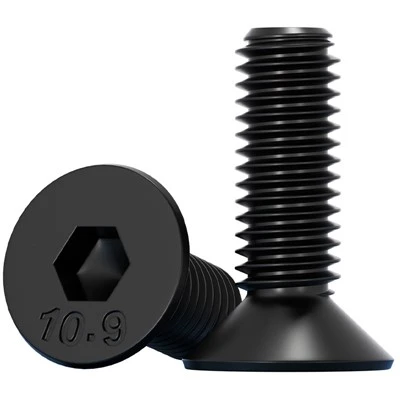
Just remember: hex bolts are super versatile, but they’re not one-size-fits-all. Skipping a nut isn’t a hack – it’s a design choice that only works if you do it right. And when in doubt, add a nut. Better safe than sorry, right?
Bolt References:
- Machinery’s Handbook, 31st Edition, Industrial Press, 2020.
- ASME B18.2.1 – Hex Cap Screws, American Society of Mechanical Engineers, 2021.
- Fastener Engineering Principles and Practice, J.F. Shaw, Elsevier, 2018.
- Automotive Fasteners Handbook, SAE International, 2019.
Handan Dongchao Hardware Products Co., Ltd.
As one of the most professional hex bolt manufacturers and suppliers in China, we have world-leading production equipment and strong manufacturing capabilities. Please feel free to wholesale bulk high quality hex bolt in stock here and get pricelist from our factory. Customized orders are welcome.
Address: West of Xiaobeizhuang Village, South of Beizhangzhuang Village, Hanshan District, Handan City
E-mail: david@dcscrews.com
WebSite: https://www.dc-screws.com/
