If you’ve ever walked through a manufacturing facility, a warehouse, or a construction site, you’ve probably glanced at a signal tower light without thinking twice about it. That stacked, colored column of lights—usually red, yellow, and green, sometimes with a buzzer or a status display—doesn’t just look like a simple safety gadget. For someone who’s been supplying signal tower lights for over a decade, I can tell you their cost isn’t just a number on a price tag. It’s a mix of engineering, materials, testing, shipping, and even the years of support that comes with the product. Let me break down what goes into figuring out the cost of a signal tower light, from the parts inside to the service that comes after. Signal Tower Light

First, let’s start with the basics: what a signal tower light is, for anyone who might be new to the space. These lights aren’t decorative. They’re industrial communication tools. A factory floor might use a green light to signal a machine is running smoothly, yellow to warn it’s due for maintenance, and red to say it’s stopped or needs immediate attention. Some models add a blue light for operator calls or a white light for general alerts. Many also have an audible alarm—buzzer, siren, or tone generator—to grab attention even if a worker isn’t looking at the light. Every part of that system ties back to cost, and cutting corners on any one part can lead to big problems for buyers.
The biggest single cost factor is the light source itself. For years, signal towers used incandescent bulbs, but those are almost gone now. They burned out fast, used a lot of energy, and had to be replaced constantly. Today, almost all signal tower lights use LEDs. LEDs are way more efficient—they use about 80% less energy than incandescents—and last 20 to 50 times longer. But not all LEDs are the same. A cheap, low-grade LED might cost a few cents, but it’ll fade quickly in bright sunlight or fail after 10,000 hours of use. A high-quality LED, on the other hand, costs more upfront but can last 50,000 to 100,000 hours—meaning it’ll outlast the entire machine it’s mounted on. That’s a big reason industrial buyers pay more for premium LEDs: they don’t have to change the light every few months, which saves money on labor and downtime.
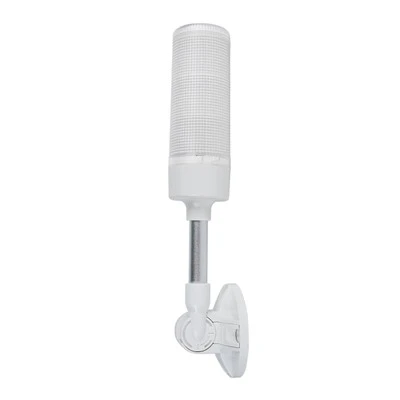
Next, there’s the housing and mounting hardware. Signal towers live in tough environments. Factories have dust, oil, water, and extreme temperatures. Warehouses might have forklifts knocking into mounting poles. Outdoor construction sites deal with rain, wind, and temperature swings from 10°F in winter to 100°F in summer. So the housing has to be durable. Cheaper models use thin plastic housings that can crack if hit or break down after a year of exposure to chemicals. Better models use polycarbonate, a strong, shatter-resistant plastic that can handle impact and harsh chemicals, or even metal for heavy-duty outdoor use. The mounting hardware also adds cost: a simple wall mount might be cheap, but a adjustable swivel mount that lets you point the light exactly where workers can see it costs more. A floor stand for temporary sites, like a construction zone, is another add-on that changes the final price.
Then there are the auxiliary features, which are where a lot of the customization happens. A basic three-light tower without an alarm costs less, but most buyers add at least an audible alert. The type of alarm matters: a simple buzzer costs a few dollars, but a multi-tone alarm that can signal different types of alerts (like a low vs. a critical error) costs more. Some towers add a digital display that shows error codes or machine status—those are popular with automated factories, and they can double the cost of the light. Other features include Wi-Fi connectivity for remote monitoring, or a flashing function that’s brighter for high-noise areas where workers can’t hear the alarm. Each of these features adds cost, but they also add value for the right user. For example, a warehouse that runs 24/7 might not need a Wi-Fi feature, but a factory with multiple spread-out production lines will pay for it to track lights from a control room.
Testing and certification are another cost that buyers don’t always see, but it’s non-negotiable for industrial use. Signal tower lights have to meet safety standards depending on where they’re used. In the U.S., that might mean UL certification, which tests for electrical safety and fire resistance. In Europe, it’s CE marking. For hazardous locations—like a chemical plant where flammable gases are present—lights need ATEX or IECEx certification, which adds a lot of testing to make sure they don’t spark and cause an explosion. That testing costs time and money, and it’s built into the final price. A light without these certifications might be cheaper, but using it in an industrial or commercial space could get a buyer fined or lead to safety violations.
Shipping and logistics also play a role, especially for bulk orders. If a buyer is ordering just one or two lights, the shipping cost is a small part of the total. But a factory that needs 50 towers for a new production line will pay for freight, and for large orders, manufacturers often offer lower shipping rates. Also, some suppliers carry local inventory, so buyers don’t have to wait weeks for a light to be shipped from overseas. That convenience adds a bit to the price, but it saves downtime for a factory that can’t afford to wait for a replacement light.
Warranty and after-sales support are the final, often overlooked, cost factor. A budget light might come with a 30-day warranty, meaning if it breaks, the buyer has to send it back and pay for replacement parts. A quality signal tower light from a reputable supplier like mine comes with a 2- to 5-year warranty, and we offer technical support to help buyers install or troubleshoot the light. That support costs money to provide, and it’s reflected in the price. But for a factory, a 2-year warranty means they won’t have to replace the light mid-shift, which could cost thousands of dollars in lost production. That’s a cost that’s not just about the light itself—it’s about peace of mind.
Now, let’s put numbers to this to make it concrete. A basic, entry-level signal tower light with three lights, a buzzer, and a plastic housing might cost between $50 and $100 per unit. But that’s for a light designed for light-duty use—like a small shop or a low-traffic warehouse. A mid-range signal tower, with high-output LEDs, a polycarbonate housing, adjustable mounting, and a multi-tone alarm, usually runs between $150 and $300 per unit. For heavy-duty industrial use—like a chemical plant or outdoor construction site— a tower with ATEX certification, metal housing, and remote monitoring can cost $300 to $600 per unit. Bulk orders, like 100+ units, usually get a discount, bringing the per-unit cost down by 10% to 20%.
I’ve seen a lot of buyers try to cut corners by going for the cheapest light they can find, and it almost always backfires. Last year, a small machine shop came to me after they bought 20 cheap signal towers for their assembly line. Within six months, half the lights had burned out, and the buzzers were too quiet to hear over the noise of their machines. They ended up paying more in labor to replace the lights, lost production time when machines stopped, and had to buy higher-quality replacements anyway. That’s the hidden cost of a cheap signal tower light: it’s not just the initial price, it’s all the problems that come with a low-quality product.
Another thing to consider is energy cost, which is an ongoing expense. A 10-watt LED signal tower uses about 87 kWh of electricity per year, at a cost of around $10 per year. An old incandescent tower would use 100 watts, or 876 kWh per year, costing about $100 per year. Over 10 years, that’s a $900 difference just in electricity for one light. For a factory with 50 lights, that’s $45,000 in savings over a decade, which more than makes up the difference between a cheap LED and a premium one.
So, when someone asks “what’s the cost of a signal tower light,” the answer isn’t a single number. It depends on what the light is for, how durable it needs to be, what features it has, and how much support comes with it. For a small business that only needs a couple of lights for a home workshop, a basic model works. For a global factory with hundreds of machines, investing in high-quality, long-lasting signal towers is a smart choice that saves money in the long run.
At the end of the day, a signal tower light is more than a light. It’s a critical part of keeping a workplace safe and running smoothly. The cost isn’t just for the plastic or the LED—it’s for the engineering that makes it reliable, the testing that makes it safe, and the support that helps when something goes wrong. If you’re in the market for signal tower lights, I’m here to help you find the right model for your needs, whether you’re ordering a few for a small warehouse or hundreds for a new production line. Reach out to my team to discuss your requirements, and we’ll work with you to get a solution that fits your budget and your operations.
Signal Tower Light References
- National Electrical Manufacturers Association. (2021). Industrial Signal Lights: Selection and Application Guidelines.
- Occupational Safety and Health Administration. (2022). Safety Standards for Industrial Communication Equipment.
- LED Industry Association. (2020). Longevity and Efficiency Comparison of Industrial LED vs. Incandescent Lighting.
- International Electrotechnical Commission. (2023). IECEx Certification Requirements for Hazardous Location Lighting.
Suzhou Pouge Lighting Electrical Appliance Co., Ltd.
As one of the most professional signal tower light manufacturers and suppliers in China, we also support customized service. Please feel free to wholesale advanced signal tower light made in China here and get quotation from our factory. For price consultation, contact us.
Address: Building 6-501, No.1330, Jinfeng South Road, Mudu Town, Wuzhong District, Suzhou City, China
E-mail: xduanlyy@126.com
WebSite: https://www.pouge-light.com/
