Let’s get one thing straight—transporting a utility tractor isn’t just hooking up a trailer and hitting the road. As someone who’s spent the last 12 years as part of a utility tractor supply team, I’ve watched way too many good tractors get banged up, and way too many customers get stuck with avoidable headaches because they skipped the small (but critical) details. Whether you’re a first-time tractor owner moving a 25-horsepower sub-compact across town or a farm manager hauling a 75-horsepower model 300 miles, this process needs to be methodical. I’ve helped walk dozens of customers through this step-by-step, and today I’m sharing what actually works—no fancy jargon, no half-baked hacks, just real lessons from the supply floor and the field. Utility Tractors
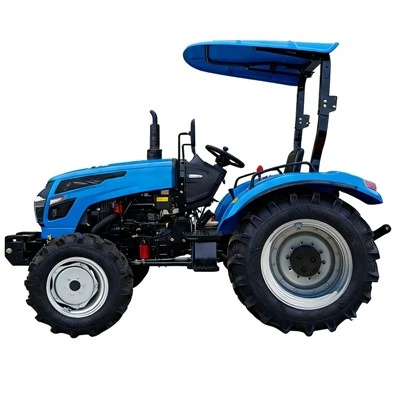
First, before you even touch a trailer or tractor, you need to match your trailer to your tractor. This isn’t the time to guess. I’ve seen a customer show up with a tiny single-axle landscape trailer, ready to haul his 50-horsepower utility tractor, and it was a disaster before he even left the lot. Utility tractors range wildly in weight and size: sub-compact models (20–35 hp) clock in at 1,500–2,500 lbs, compact utility (35–55 hp) are 2,500–4,000 lbs, and full-size utility tractors (55–100+ hp) tip the scales at 4,000–10,000 lbs, sometimes more when loaded with attachments like mowers or loaders. Your trailer has to have a gross vehicle weight rating (GVWR) that’s at least 20% higher than the total weight of your tractor and any gear you’re hauling. Why the extra 20%? Tractor loads are rarely perfectly balanced, and road bumps add sudden strain—skimp on the GVWR, and you risk trailer sway, broken axles, or worse, the trailer tipping. I always tell customers to factor in the weight of tire chains, wheel weights, even a small bag of tools on the trailer floor. A quick rule: if you’re hauling a sub-compact, a 3,500-lb GVWR single-axle trailer works for empty, but go twin-axle (7,000-lb GVWR) if you’re carrying a compact or full-size model. Never use a trailer designed for ATVs or lawn care equipment—those don’t have the reinforced framing to handle the uneven weight of a tractor’s rear axle and heavy wheels.
Next, prep both your tractor and your trailer for loading. Rushing this step is where mistakes happen. Start with the tractor: turn off the engine, remove the key, engage the parking brake, and chock the rear wheels (yes, even if you’re on flat ground—trust me). If your tractor has power steering, turn the wheel all the way to one side to lock it—this keeps it from shifting during transport, which saves you from straining your steering gear and avoids it hitting the trailer’s sides. Disconnect any loose attachments first: mowers, snow blowers, front-end load buckets, even toolboxes. These add unbalanced weight and can bounce free at highway speed. Wrap hydraulic lines in a towel or secure them with tape so they don’t flap against the tractor’s body and get scratched. Now the trailer: check every part before you back it up. Inspect the tires for low pressure or bulges, make sure the trailer’s brakes work (electric brakes are non-negotiable for trailers over 3,000 lbs), and test the lights—tail, brake, turn signal. Nothing gets a state trooper pulling you over faster than a broken trailer light, and more importantly, you need those lights to be visible to others. Lay down ¼-inch thick rubber mats or heavy-duty interlocking plastic mats on the trailer floor. Tractors have rough, metal frames and sharp edges that can scratch the trailer floor and even cause small punctures—those mats add grip for the tires too, which is key when loading.
Loading the tractor is the next make-or-break step, and this is where patience pays off. Never rush up a ramp—most trailer accidents happen during loading, not on the road. First, make sure your trailer is level, not tilted forward or backward. If your tow vehicle is a pickup, park it on level ground and back the trailer straight in, with its jack retracted so it doesn’t touch the ground. Get a friend to spot you as you back up—blind spots around a trailer are huge, and a misaligned ramp is a tripping hazard. The ramps themselves matter too: use heavy-duty steel ramps (not aluminum, which bends easily) that are at least 10 feet long for tractors over 3,000 lbs. Longer ramps mean a shallower angle, so less strain on the tractor’s front end. Steeper than a 15-degree ramp will stress the transmission and even cause the tractor to back over when loading—yes, I’ve seen that. Once you’re lined up, drive slowly onto the trailer, not in a straight line? Wait, no—drive dead center. Off-center load is the number one cause of trailer sway. Stop when the tractor’s rear axle is centered on the trailer’s midline—this balances the weight evenly between the trailer’s axles. For a sub-compact, that midpoint is roughly ⅔ of the way from the tractor’s front axle to its rear axle. For larger models, double-check that the center of gravity (which is usually around the rear axle) is aligned with the trailer’s axle line. Before you even turn off the tractor, chock the front tires as well—same rule as the rear, even if the parking brake is engaged. I once had a customer skip this step because his parking brake seemed “strong enough,” and halfway down the road, the tractor rolled slightly forward, scratching the trailer and loosening a strap at the back.
Securing the tractor isn’t just a matter of grabbing some rope and tying it on. This is the part that keeps your tractor (and other drivers) safe. You’ll need the right equipment here: four heavy-duty ratchet straps (at least 10,000 lbs working load limit each—never use nylon rope or cheap bungee cords), two wheel chocks rated for your tractor’s tire size, and maybe a pair of corner braces if you’re hauling a very large model. Start with the wheel chocks: place them firmly against both front tires, one on each side. Next, attach your ratchet straps to the tractor’s frame, not the fenders or the attachments. Fenders are plastic or thin metal—they’ll break under tension, and attachments can pull off. Look for reinforced frame points, usually on the rear axle mounts or the front grill support, that are designed to handle that kind of force. For each strap, run it from the trailer’s anchor points (which should be rated for at least the same weight as the straps) straight to the tractor’s frame. Cross the front straps over one another in an X-pattern, and do the same for the rear straps. This cross pattern prevents the tractor from shifting forward or backward, which is way more effective than pulling straight. Tension each strap evenly—don’t crank one side so tight it warps the frame, and don’t leave them slack enough to swing. A good rule: after tightening, you shouldn’t be able to move the strap more than 2 inches up or down with moderate force. For tractors over 5,000 lbs, add a set of tension bars between the top of the tractor’s frame and the trailer’s side rails, to prevent side-to-side sway. I also recommend taping the ratchet handles down so they don’t vibrate loose on the road—nothing’s worse than stopping 100 miles in to find a strap has come undone.
Now the tow vehicle and pre-road check. Your tow vehicle needs to be able to handle the total weight of the trailer plus tractor, right? That’s where that GVWR we talked about earlier comes in. Check your tow vehicle’s owner’s manual for its maximum towing capacity, and don’t exceed it—even if your truck can “t technically pull it,” the steering and braking will be unresponsive, especially on hills. For example, a half-ton pickup might tow 10,000 lbs, but that’s only if it’s properly equipped with a heavy-duty hitch and trailer brakes; don’t push a ½-ton beyond 8,000 lbs, especially if you’re hauling a full-size utility tractor. Before you pull out, do a full walkaround. Check every strap again, confirm the trailer lights are working (ask a friend to stand behind and hit the brakes, turn signals, and hazards), test the trailer brakes if you have them, and make sure the jack is stowed and locked. Leave extra space between your tow vehicle and the car in front of you—trailers have longer stopping distances than passenger vehicles. A good rule is to add one extra second of following distance for every 1,000 lbs of total load. So if you’re hauling an 8,000 lb tractor-trailer combo, that’s 8 seconds of following distance, not the standard 3.
Once you’re on the road, drive smart. Avoid sudden stops, fast lane changes, and steep hills if you can—they put unnecessary stress on the trailer and the load. If you’re hauling over 50 miles, plan to stop every 50 miles to do a quick check. Get out, walk around the trailer, feel the straps to make sure they’re still tight, check the trailer tires for overheating, and confirm the chocks are still in place. I once had a customer haul his tractor 200 miles without stopping, and when he got to his destination, one rear strap had snapped, and the tractor had shifted 6 inches to the side—thankfully not enough to cause an accident, but the dent on the trailer frame cost him $400 to fix.
Now, let’s talk about common mistakes I see all the time, because these are the ones that trip people up. First, using the wrong ramp angle. I can’t stress this enough—15 degrees is the max. If you don’t have long enough ramps, you can place a piece of 2×6 lumber under the front tractor wheels to lower the ramp angle slightly, but only do that if the lumber is secured so it doesn’t shift. Second, overloading the trailer. A lot of customers see their truck can tow X pounds, so they just hook up the biggest trailer possible, but they forget the trailer itself adds 1,000–2,000 lbs. Add that to the tractor weight, and you might be over your truck’s capacity before you even leave the lot. Third, skipping the X-pattern straps. Tying straight straps front and back might seem like it works, but if you hit a pothole hard, the tractor can slide forward or sideways. The cross pattern distributes tension evenly across the frame. Fourth, not disconnecting hydraulics. If you leave the hydraulic lines connected to a front loader, they can get kinked or ripped during transport, leading to leaks that cost hundreds of dollars to fix.

At the end of the day, transporting a utility tractor is all about preparation. Whether you’re a hobby farmer moving a sub-compact for your acreage, or a contractor hauling a model for a job site, taking an extra hour to double-check every step will save you weeks of hassle (and costly repairs) down the line. We’ve supported thousands of customers with their utility tractor needs, and that includes transport guidance—we know how stressful moving this kind of equipment can be, especially when you’re doing it for the first time. If you’re in the market for a new utility tractor, or you need help planning your next transport, our team is here to walk you through every detail, from matching the right model to your needs, to sharing tailored transport tips specific to your tractor size. Don’t hesitate to reach out to our supply team to chat through your requirements and get all the advice you need.
Utility Tractors References:
- North American Equipment Dealers Association. “Tractor Transport Best Practices for Small and Mid-Size Agricultural Equipment.” 2022.
- Trailer Transport Industry Association. “GVWR Guidelines for Hauling Agricultural Equipment.” 2021.
- Occupational Safety and Health Administration. “Guidelines for Safe Machinery Transport in Agricultural Settings.” 2020.
- Utility Tractor Engineering Standards Board. “Frame Load Requirements for Transporting Mid-Size Tractors.” 2023.
Shandong Woye Heavy Industry Co., Ltd.
As one of the most experienced utility tractors manufacturers in China, we ensure reliable supply for global partners. We warmly welcome you to wholesale high-grade utility tractors for sale here from our factory. Quality products and reasonable price are available.
Address: No. 7999, Health East Street, Qingchi Street, High Tech Zone, Weifang City, Shandong Province, China
E-mail: info@woyemachinery.com
WebSite: https://www.woyeagro.com/
