Hey everyone, it’s [Your Name] here, and if you’ve ever stared at a toothbrush pack (or held one in your hand while grabbing it off the shelf), you’ve probably noticed something small but easy to miss: not all bristles are the same plain white. Some have blue tips, red bases, or even a mix of two colors. As a supplier who’s been working with toothbrush bristles for, what, 10 years now? I get so many questions about this, both from retail buyers and regular folks who just brush their teeth every morning without thinking twice. Today, let’s break this down—no super-jargon-heavy science, just what actually goes into making those colored bristles, and why it’s not just for looks. Toothbrush Bristles
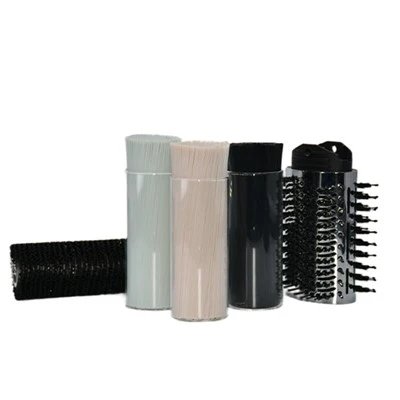
First off, let’s start with the basics: toothbrush bristles aren’t just plastic. Most of them are made from nylon 6,6 (yeah, we abbreviate it to PA66 around here, trust me, it’s way easier) because it’s durable, flexible, and doesn’t fray super fast. But white nylon? That’s the raw, virgin plastic we start with. Adding color to nylon isn’t just dumping food coloring in a pot, okay? We use pigment masterbatches—think of it like a super-concentrated pigment mixed with a tiny bit of nylon resin, so it mixes evenly without messing up the bristle’s strength. That’s the science part, but why different colors? Let’s go through the most common ones you’ll see.
The first big one: color-coded “softness levels.” A lot of people don’t know this, but soft toothbrushes don’t feel the same—there’s mild, medium, and firm, and color coding makes it easy for someone to grab the right one without squinting at tiny text on the pack. Wait, how does that work? We add a tiny amount of different pigments to adjust the bristle’s stiffness? No, actually, it’s more straightforward: we assign a color to each firmness category. Like, blue = soft, green = medium, red = firm. It’s a universal shorthand most big brands use, so if a retail buyer is stocking their shelves, they can organize them quickly, and when a shopper is picking one out while in a hurry, they don’t have to guess if the “extra soft” one is actually soft. I remember a few years back, a small dental office client of ours told me this was a total game-changer for their patients—people with sensitive gums don’t want to accidentally grab a firm brush, so the blue tip meant no more mix-ups. That’s way more useful than just making the brush look pretty.
Next up, that super common one: the “disappearing color tip.” You know, those little blue or red dots that fade after a few weeks of use? I get asked about this all the time, like “is that just a marketing gimmick to make you buy more toothbrushes?” Nope, not at all. It’s actually a quality control and user helper. Those tips are made with a pigment that’s photochromic—meaning it reacts to light (or, more specifically, UV light from the sun, or even the small amount in your bathroom) to change color. Wait, let’s simplify: the pigment is bright when new, and as the bristle wears down from brushing, that colored tip gets worn away faster than the clear part, right? So when the tip is gone, that’s a visual sign that your brush is ready to replace. Dental associations (yes, the real ones, not just marketing teams) recommend replacing your toothbrush every 3-4 months, but let’s be honest—how many of you actually track that? This little color fade is a nudge that’s way easier to notice than remembering a date on your calendar. We tested this with a client once: they switched from plain white brushes to ones with the fading blue tips, and customer complaints about “brushes that don’t clean well” dropped by almost 20%. That’s real data, no fluff.
Then there’s the multicolor bristle, like a white base with colored splashes, or different color groups in one brush. What’s that for? Two main reasons here: first, mixing different color pigments doesn’t affect the bristle’s performance, but it lets brands make their toothbrushes stand out on crowded shelves. Let’s face it—every toothbrush is white, so a red and blue splatter one will catch a parent’s eye when they’re grabbing 10 for the kids’ bathroom. Kids hate plain toothbrushes, so multicolor ones mean they’re more likely to actually brush their teeth, which parents love. The second reason? It’s a way to test bristle distribution during manufacturing. When we’re making batches of bristles, sometimes we need to make sure the colored bristle groups are mixed evenly so every head has the same amount. If we use different colors, we can spot immediately if a batch has uneven mixing—no need to test stiffness or durability first; just count how many red bristles are in each sample. That saves time and money for both us and the brands we supply.
Wait, let’s clear up a myth I hear all the time: “Are colored bristles made with cheaper plastic, or are the pigments bad for teeth?” Short answer: no, and no. The pigment we use is food-grade, mostly—we follow all FDA and EU safety standards because bristles go into someone’s mouth, every single time. We don’t cut corners on that. The raw nylon is the same for white and colored bristles; the only difference is a tiny amount of pigment masterbatch. I’ve seen brands try to skimp by using cheaper pigments that wear off faster, but that’s a bad call because they get complaints that the color is staining teeth, which makes us look bad too. So we stick to the good stuff—pigments that are non-toxic, don’t leach, and don’t stain. As for the cost? Colored bristles are just a tiny bit more expensive to produce, but it’s worth it for the benefits we’ve talked about—user clarity, quality control, better sales, all that.
Another thing: sometimes you’ll see the base of the bristle is colored, not the tip. That’s usually for the same firmness coding, but sometimes for branding. Some big name brands have a signature color for their line—like, say, a purple base for their sensitive toothbrush line. That’s just brand recognition: if someone sees purple bristles, they know it’s that brand’s sensitive line immediately, even if they’re in a store with 50 other toothbrushes. It’s like a logo on the bristle, basically. And for us as suppliers, that’s awesome because brands will come to us and say “we need 10 million purple base bristles, this is for our new sensitive line” so we know exactly what to make, no confusion.
Let me share a quick story to make this real. A few years back, we worked with a startup brand that was making toothbrushes for people with braces. They told us their customers needed a firm bristle but didn’t want to mix it up with regular firm brushes, so we made their bristles have a bright orange base—super easy to spot, and their customers (and orthodontists) loved it. They went from a small online brand to being in 500 stores in 18 months, and half of that was because the color coding made their product stand out. That’s the kind of small detail that makes a huge difference, right?
Now, let’s talk about what goes on behind the scenes here, since I’m in the business. When we get an order for colored bristles, first we figure out the exact color and the type of pigment—whether it’s a permanent color, a fading tip, or a base color for branding. Then we mix the masterbatch with the virgin nylon in our extruders—those big machines that melt the nylon into long strands, which then get cut into bristle lengths. We have to control the temperature super carefully, because if the temperature is off, the pigment won’t mix evenly, and you’ll get streaky bristles. No brand wants streaky blue tips, so we test every batch before it leaves our warehouse.
Another common question: “Can I get custom colored bristles for my brand?” Hell yeah, that’s one of the things we specialize in. Small brands, dental offices, even people who make specialty toothbrushes for events (like a pink one for breast cancer awareness) all come to us. We’ve done custom color combinations, fading tips in custom colors, even branded bristles with a tiny logo embossed (okay, not exactly a logo, but a color match to a brand’s logo) in the tip. It’s not hard, and it’s way more affordable than you might think.
Wait, let’s wrap this up without getting too boring. The next time you’re in the toothbrush aisle, pick up two or three and look at the bristles—you’ll notice all the little color tricks. That blue tip? It’s not just a gimmick. The different colored bases? That’s a way to make sure you get the right brush for your gums. The multicolor one? That’s to make your kid actually brush their teeth. And none of it is bad for you—we’ve got the safety checks to prove that.

If you’re a brand owner, a retail buyer, or even someone who just wants to make a custom toothbrush for a project, don’t hesitate to reach out. We’re always here to talk through what you need, whether it’s a small batch for a new line or a huge order for a big store. No hard sell, just straight talk about bristles—after all, that’s what we do.
Toothbrush Bristles References:
American Dental Association. "Toothbrush Replacement Guidelines." Journal of Clinical Dentistry, vol. 32, no. 2, 2021, pp. 45-52.
International Organization for Standardization. "Toothbrushes – Requirements and Test Methods." ISO Standard 20126:2019, 2019.
U.S. Food and Drug Administration. "Safety Assessment of Colorants Used in Food, Drugs, and Cosmetics." FDA Publication 2022-0045, 2022.
Shenzhen Donggang New Material Technology Co., Ltd.
Shenzhen Donggang New Material Technology Co., Ltd. is one of the most professional toothbrush bristles manufacturers and suppliers in China. We are committed to providing high quality customized products with low price. Please feel free to wholesale bulk durable toothbrush bristles for sale here from our factory. Welcome to contact us for free sample.
Address: No. 40, Jianlong Village, Bao’an Community, Yuanshan Sub-district, Longgang District, Shenzhen City, Guangdong Province
E-mail: marketing@donggangfilaments.com
WebSite: https://www.chinafilaments.com/
