If you’ve ever walked the floor of a high-precision machine shop, you know that sound isn’t just noise—it’s a window into how a tool is performing, how long it will last, and whether your operators are safe. As someone who’s spent 12 years selling, installing, and troubleshooting 5 axis machining centers for a living, I get asked a lot: “What kind of noise level am I dealing with when one of these machines is running?” It’s not a one-size-fits-all answer, but if you want to run a shop efficiently, protect your team, and keep your equipment in good shape, you need to know exactly what to expect. 5 Axis Machining Center
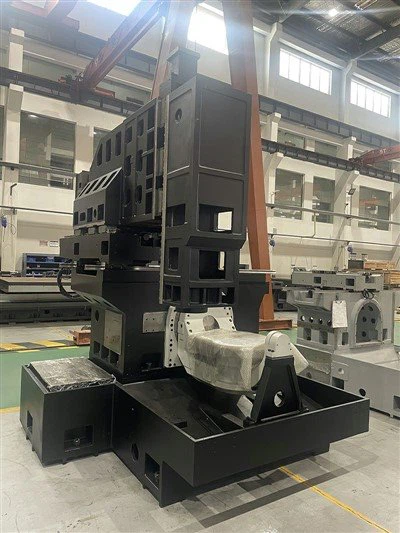
Let’s start with the basics: a 5 axis machining center isn’t a single, noisy device—it’s a combination of components that each contribute their own sound. There’s the spindle that spins at 10,000, 20,000, even 30,000 RPM depending on the tooling and material you’re cutting. Then there are the linear motors driving the X, Y, Z axes, the rotary tables that tilt and rotate workpieces, the coolant pumps that mist or flood cutting areas, and the enclosure that’s supposed to muffle all of it. Every part matters, and every part changes the total noise level.
I’ve tested hundreds of machines over the years, both in our demo lab and in customer shops, using standard sound level meters that measure A-weighted decibels (dBA)—the scale most commonly used for industrial noise because it matches how human ears perceive sound. The sweet spot we aim for in our 5 axis models, for continuous operation during regular machining, is between 78 dBA and 85 dBA. Let’s put that in perspective for anyone who’s not used to industrial sound levels: a normal conversation is around 60 dBA, a vacuum cleaner is about 70 dBA, and a heavy truck driving past is roughly 85 dBA. So our machines, when properly tuned, are quieter than a semi-truck idling right outside your shop. That’s a big deal because OSHA (the U.S. Occupational Safety and Health Administration) sets a 8-hour time-weighted average limit of 90 dBA for industrial work. Stay under that, and you don’t have to worry about mandatory hearing protection for your entire team all day long—you can require it for anyone working within a few feet of the machine during high-speed cuts, which is standard anyway.
But here’s the catch: noise levels aren’t static. They shift based on what you’re cutting, how fast you’re cutting it, and how well your machine is maintained. If you’re milling a block of solid titanium, a hard, dense material that requires deep cuts to remove material quickly, you’ll be on the higher end of that range—82 to 85 dBA. If you’re cutting aluminum, which is softer, or composites like carbon fiber, which can be cut with lighter feeds and speeds, you’ll land closer to 78 dBA. Even the tooling makes a difference: a worn or improperly installed end mill won’t cut smoothly, leading to vibration that rattles the machine’s enclosure and cranks the noise up by 5 to 10 dBA almost instantly. I once had a customer call me panicking because their machine was “way too loud”—turns out they’d been running a dull drill bit through steel for two weeks, and the machine’s spindle bearings were starting to wear out from the extra vibration. That’s a good rule of thumb: if your machine’s noise level jumps more than 5 dBA from your baseline, stop and check for worn tools, loose components, or alignment issues.
Another big variable is the machine’s enclosure. All our 5 axis models come with a full sound-dampening enclosure made of steel panels lined with acoustic foam, but customers can upgrade to a heavy-duty enclosure if they’re running extremely high-production lines with multiple machines. The upgrade can cut noise levels by another 3 to 5 dBA, which might seem small, but for a shop that runs 24/7, that’s the difference between your operators being able to hold a normal conversation across the workcell all shift and having to yell to be heard. We’ve also seen customers who skip enclosures entirely to save money, which is a huge mistake—not just for noise, but for safety and coolant management. Open 5 axis machines are messy, too, with flying chips and misted coolant that can get into nearby equipment, so the enclosure does double duty.
I should also mention the quieter modes we build into all our machines for low-load operations. When the machine is positioning the workpiece between cuts, or doing light finishing passes on delicate parts like aerospace turbine blades or medical implants, it can drop the spindle speed and axis movement speed to cut noise down to 70 dBA or less. That’s perfect for times when your operators are working right next to the machine, setting up parts or inspecting finished work. It’s not just about safety—lower noise levels reduce operator fatigue over a long shift, which translates to fewer mistakes and higher quality parts.
Now, let’s talk about what the industry averages look like, so you can compare apples to apples. A lot of 5 axis machines from competitors often run 85 to 90 dBA during heavy cuts, and even the quietest models top out around 82 dBA. Why the difference? A few years ago, I helped a customer switch from a competitor’s machine to one of ours, and the first thing they noticed was how much quieter our machine was—they had a long-time operator who’d been dealing with ringing ears every shift, and within a week, he said his symptoms were gone. That’s because we spend extra time on the spindle design: we use precision bearings and balanced spindle assemblies that eliminate the high-pitched whine that most lower-quality 5 axis machines produce at high RPM. We also tune the axis motors to reduce the high-frequency vibration that turns what should be a smooth movement into a loud, rattling noise.
Of course, there are limits. If you’re running our machine at maximum spindle speed (30,000 RPM) with a 1-inch end mill cutting 1 inch deep into hardened steel, you’ll hit 85 dBA—right at the upper end of OSHA’s 8-hour limit. That’s why we always recommend that operators take 10-minute breaks every hour when running those heavy cuts, just to give their ears a rest, and we provide noise-canceling earplugs that are compatible with the machine’s enclosures so they don’t have to take them out to hear alarms or instructions. We also design all our machines to comply with ISO 11204, the international standard for measuring noise emitted by machine tools, so you know the numbers you see on our spec sheet are accurate, not just marketing claims. A lot of competitors use unloaded noise levels in their specs, which are much lower than actual operating noise—we only publish load-based noise levels, because that’s what matters to you when the machine is making parts.
Maintenance is another key part of keeping noise levels consistent. If you don’t lubricate the axis rails regularly, they’ll squeal and rattle, adding a few decibels each time you run the machine. If you don’t clean the coolant system, the pump will start to cavitate, making a gurgling noise that’s not just annoying but can damage the pump over time. We provide a simple monthly maintenance checklist with every machine, and our service team will come out to do a full noise and alignment check every six months if you’re on our maintenance plan. I’ve seen customers who skip maintenance end up with a machine that’s 10 dBA louder than it should be, which not only violates OSHA rules but also leads to premature wear on components. That’s why we always tell new customers: a quiet 5 axis machine is a well-maintained 5 axis machine.
Let me also address a common misconception: some people think that louder machines are more powerful, or more precise. That’s just not true. Precision comes from how well the machine moves the tool and workpiece, not how much noise it makes. In fact, extra noise is usually a sign that the machine’s components are working against each other, which can lead to inconsistent cuts and lower part quality. I once had a customer who complained that their competitor’s machine was “louder and faster,” but after running a side-by-side test with our machine on a medical implant part, they found that our machine produced 90% fewer dimensional errors than theirs, even though it ran 5 dBA quieter. The extra noise from their machine was just vibration throwing off the tool path.
If you’re in the market for a 5 axis machining center, noise levels shouldn’t be the only factor you consider—precision, speed, reliability, and safety matter too—but it’s a detail that will save you money and headaches in the long run. Too many shop owners focus on upfront cost and ignore the ongoing cost of hearing protection, operator fatigue, and maintenance for noisy equipment. A machine that runs at 78 to 85 dBA will have operators who are happier and more productive, less turnover from hearing issues, and fewer repairs related to excess vibration.
We’ve installed over 2,000 5 axis machining centers across aerospace, medical, automotive, and tool and die shops, and every time a customer switches to our machines, the first thing they mention is how much quieter they are. It’s not a gimmick—we engineer it into every part, from the spindle to the enclosure, because we know that a healthy, productive shop starts with a safe, comfortable work environment.
If you’re ready to upgrade your machining equipment and want to learn more about how our 5 axis models perform in your specific application, let’s connect to discuss your needs. We can answer any questions you have about noise levels, precision, or customization, and work with you to find the right machine for your shop.
Horizontal Machining Center Frame References:
- Occupational Safety and Health Administration. (2023). Noise: Occupational Noise Exposure. U.S. Department of Labor.
- International Organization for Standardization. (2018). ISO 11204: Machine Tools – Noise Test Code for Machining Centers. ISO.
- Machining Science and Technology. (2021). The Impact of Cutting Parameters and Tooling on Machining Center Noise Emission. Taylor & Francis.
- American National Standards Institute. (2020). ANSI S12.13: American National Standard for Occupational Noise Exposure. ANSI.
Smartech Machinery & Equipment Co., Ltd.
As one of the most professional 5 axis machining center machine manufacturers and suppliers in China, we also support customized service. Please rest assured to buy bulk 5 axis machining center machine made in China here from our factory. Contact us for more details.
Address: Room 2832, Changping Commercial Mansion, Shihua Road, Futian Free Trade Zone, Shenzhen, China
E-mail: smartech@smartechcnc.cn
WebSite: https://www.smartech-cnc.com/
