If you’ve ever stopped to appreciate a sleek, modern deck or a contemporary stairway, chances are the glass railing had a quiet hand in its appeal. At our company, we get this question all the time from homeowners, architects, and contractors alike: Can I add patterns to glass railings? The short answer is yes—but there’s way more to it than just slapping a design on a piece of glass. As a glass railing supplier who’s been in this game for over a decade, I’ve seen every mistake and every stunning win when it comes to patterned glass, and today I want to walk you through what works, what doesn’t, and how to get it right. Glass Railing
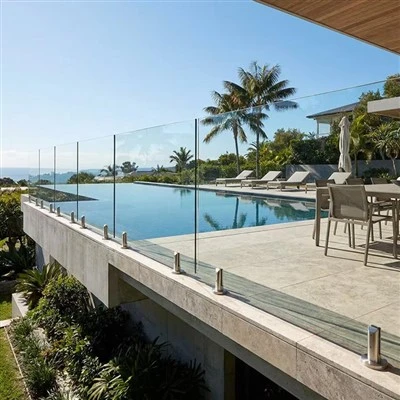
First, let’s start with the basics. Not all glass is cut out for patterns, and not all patterns hold up the way you’d want in a railing. The core of a good railing is durability—you’re dealing with something that has to hold up to weather, foot traffic, temperature swings, and years of use without cracking, peeling, or looking dated. That’s why we exclusively work with tempered or laminated glass for all our railings. Tempered glass is four times stronger than regular glass, and when it breaks, it crumbles into tiny, dull pieces instead of sharp shards—critical for safety. Laminated glass has a layer of plastic between two panes, so if it does crack, it stays intact. Both materials are perfect bases for patterns, but how you apply the pattern matters most.
Let’s break down the most common pattern options, because not every style fits every space, and some are way more practical than others. The first and most popular is acid etching. This is where we apply a stencil to the glass, then etch the unprotected areas with a mild acid that creates a frosted, semi-transparent look. You can do simple geometric patterns—diamonds, stripes, waves—or more intricate florals, script, or abstract designs. What I love about acid etching is that it’s permanent; it won’t scratch off, fade, or chip like some other methods. We’ve done acid-etched railings for a lake house in Minnesota that’s been through 12 brutal winters, and the pattern still looks as crisp as the day we installed it. The downside? It’s semi-transparent, so if you want unobstructed views for a balcony or a rooftop deck, etching isn’t the best pick. It’s better for spaces where you want a little privacy but still want light to filter through, like a front porch or a stairway in a busy urban home.
Next up: silk screening (or screen printing) patterns. This is where we use a fine mesh screen to apply a heat-cured ink directly to the glass. The ink is matched to your exact color, so you can do solid designs—thin lines, decorative borders, even full custom images. We did a set of railings for a family that wanted a subtle pattern of pinecones on their mountain home, and the dark green ink complements the cedar siding perfectly. The big plus here is versatility: you can do sharp, clean lines that hold their shape, and the ink is durable enough for outdoor use. The catch? If you want a transparent pattern, silk screening works best with light, semi-transparent inks—thicker or darker inks can make the glass look opaque, which might block views. Also, if you ever want to change the pattern later, you can’t strip the ink off, so it’s a permanent choice unless you replace the glass.
Then there’s fused glass patterns, which is a step up for something truly custom. This isn’t just adding a design to the surface—we take small pieces of colored glass, arrange them in a pattern on top of the main glass pane, and heat the whole thing in a kiln until the pieces melt and fuse together. The result is a textured, three-dimensional pattern that’s vibrant and unique. We recently finished a project for a coastal villa where we fused seashell and wave patterns into each railing pane, and it’s a showstopper—you can run your hand over the slight texture, and the light hits the fused pieces differently at all times. The tradeoff here is cost and lead time. Fused glass is more expensive than etched or screened patterns, and it takes longer to make, so it’s better for small, statement projects rather than full railings for a large deck. Also, the texture can collect dust or water spots more easily than smooth glass, so it needs a little more cleaning.
Wait a second—can you get patterns on tempered glass? That’s a question we get all the time, and it’s a make-or-break detail. A lot of people assume you have to temper the glass first, but actually, it’s safer to apply patterns before tempering. When you heat glass to temper it (we do this at around 620 degrees Celsius), any chemicals or inks on the surface can burn, discolor, or even react with the glass, ruining the pattern. So the right process is: cut the glass to size, apply the pattern, then temper it. That way, the pattern is sealed inside the glass, protected from the elements, and the glass is strong and safe for railings. We never try to add patterns to already tempered glass—we’ve seen what happens when you skip that step: the pattern fades, the glass weakens, and you end up with a replacement long before you should.
Now, let’s talk about safety and code, because this is non-negotiable for railings. Patterns can’t compromise the strength of the glass, and they can’t create a tripping or hazard risk. For example, if you’re doing a stair railing, the bottom 30 inches (or whatever your local code requires) needs to be unobstructed enough that a 4-inch sphere can’t pass through—wait, no, actually, let me get that right. Most building codes say that for glass railings in residential applications, the opening between any two parts of the railing can’t be more than 4 inches, to prevent a child from getting their head stuck. But when you add a pattern, you have to make sure you’re not creating gaps that are too big, or blocks that reduce the strength of the glass pane. We always run a code check before we design any patterned railing, so you don’t have to worry about ending up with something that doesn’t pass inspection.
Another big consideration: where you’re installing the railing. Is it outdoors? Indoors? Near a pool? All these factors change what pattern works best. For example, if you’re putting railings around a swimming pool, you want a pattern that’s slip-resistant? Wait, no—actually, the glass itself is smooth, but if you have a textured fused pattern, it can help with traction a little, but most pool code requirements focus more on strength than texture. For outdoor railings in sunny climates, you want patterns that resist UV damage. Acid etching and silk screening work well here because the materials we use are UV-stabilized—they won’t turn yellow or fade after years of sunlight. Fused glass can also work, but bright colors might fade over time if not treated with a UV-resistant coating, so we always add that for outdoor projects.
I want to share a story that sums up how important choosing the right pattern is. A few years back, we had a contractor come to us asking for railings for a new rooftop bar. They wanted a fun, retro vibe, so they picked a neon pink pattern of palm trees from an online gallery. We warned them that silk screening neon pink on glass would look cheap in person, and that outdoor neon pink would fade in a year. They didn’t listen, went with a cheaper supplier, and by the following summer, those railings were a washed-out pale pink, blurry, and looked nothing like the original design. They ended up replacing them with acid-etched designs that match the bar’s vibe perfectly, and those have held up for five years now. That’s why we always advise clients to see a sample first—never go by a photo on a website. A pattern that looks great on a computer might look clunky or low-quality on glass.
What about custom patterns? A lot of homeowners want to put their family name, a favorite quote, or a photo of their pet on their railings. Can we do that? Absolutely. With digital silk screening, we can turn any image or text into a high-resolution pattern that’s crisp and clear. We did a project for a family where they wanted a small portrait of their golden retriever on each stair railing, just big enough to see up close, and it’s such a personal touch. The only tip here is to keep the image simple—too many fine details might get lost when the pattern is applied to glass. Also, for photos, we suggest high-contrast images (black and white usually works best) because lower contrast can get muddy after tempering and exposure to light.
Now, let’s address the elephant in the room: are there any patterns you shouldn’t use? The biggest no-no is anything that creates sharp edges or protrusions on the glass surface. Even a small raised design can catch clothing, scratch skin, or get damaged by debris. That’s why we avoid any patterns that add texture above a certain height, or any designs that have sharp, unrounded corners. Also, avoid patterns that are too busy—if your railings are going along a long deck, a dense, intricate pattern can be visually overwhelming and distract from the space around it. The best patterned railings are subtle enough to add character without taking over the entire look of your home.
Maintenance is another thing to think about. Most patterned railings are just as easy to clean as regular glass—all you need is a glass cleaner and a soft cloth. But fused patterns, as I mentioned earlier, can have little crevices where dirt and water spots get stuck. For those, we recommend a soft brush to get into the textured areas a couple times a year. Acid-etched glass is actually more resistant to smudges and fingerprints than smooth glass, because the frosted surface doesn’t show every little mark. Silk-screened glass is smooth, so it cleans just as easily as clear glass, as long as the ink is properly cured.
I’ve been in this industry long enough to know that a lot of suppliers will tell you anything to make a sale, but when it comes to patterned glass railings, it’s all about balance: design that fits your space, materials that last, and adherence to safety and code. We’ve had clients come to us after working with another company that messed up a pattern, or used the wrong glass, and we’ve had to fix their mistakes. That’s why we take the time to walk you through every step: from choosing the right pattern, to making sure it works for your location and code, to providing a sample so you can see exactly what it will look like before we start production.
At the end of the day, adding patterns to glass railings is a great way to personalize your space, add privacy where you need it, or make a statement with a unique design. But it’s not a decision you should make on a whim. Take the time to research your options, talk to a supplier who knows what they’re doing, and most importantly, prioritize durability and safety over a trendy design that will look dated in a few years.
If you’re ready to explore patterned glass railings for your home, project, or business, we’re here to help. We work with architects, contractors, and homeowners all over, and we can guide you through every step, from concept to installation. Don’t hesitate to reach out to start the conversation about your project.
Stainless Steel Railing References:
- International Code Council. (2021). International Residential Code for One- and Two-Family Dwellings.
- Glass Association of North America. (2020). Glass Railing Design and Installation Guide.
- Smith, J. et al. (2019). Durability of Surface Patterns in Exterior Glass Applications. Journal of Architectural Glass and Glazing.
- Miller, L. (2018). Custom Glass Patterns: A Practical Guide for Residential and Commercial Spaces. Fine Homebuilding Publications.
ZP Aluminum Co., Ltd.
ZP Aluminum Co., Ltd. is one of the most professional glass railing manufacturers and suppliers in China. With abundant experience, we warmly welcome you to wholesale customized glass railing made in China here from our factory. If you have any enquiry about quotation, please feel free to email us.
Address: LEPING INDUSTRIAL ZONE, SANSHUI DISTRICT, FOSHAN, GUANGDONG, CHINA
E-mail: general@zp-aluminum.com
WebSite: https://www.zp-railing.com/
