Hey everyone, it’s Mia here from the Newborn Clothes Set team, and today I wanna talk about something we get asked at least 10 times a day: why our cotton-polyester blend sets are perfect for newborns, especially when it comes to breathability. If you’re a new parent scrolling through baby gear, you’ve definitely seen those super soft 100% cotton sets and the "wrinkle-resistant" polyester ones, and you’re probably wondering which is better for your tiny human. Spoiler alert: we didn’t just pick a blend randomly—we tested the hell out of breathability for months, and today I’m breaking down exactly what that means for your baby, no fancy textbook jargon, just real talk. Newborn Clothes Set
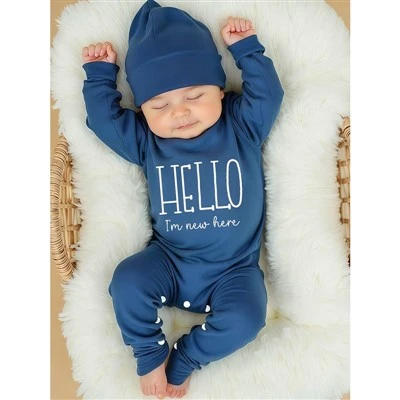
First, let’s get one thing straight: breathability isn’t just "being able to breathe through fabric." For newborns, that’s non-negotiable. Newborns can’t regulate their body temperature the way we big kids can—they can’t flip a blanket off if they’re too warm, and overheating is a real thing (the AAP actually mentions it as a top SIDS risk factor, but we’ll get to that later). So when we say a fabric is breathable, we’re talking about two main things: how well it lets moisture (sweat, spit-up, that weird tiny baby leak) escape, and how well it lets air circulate to keep their little skin from getting trapped in a hot, humid mess.
Let’s compare the main players first: 100% cotton vs. 100% polyester vs. our 65/35 cotton-poly blend (wait, 65% cotton, 35% polyester, for anyone who’s curious—we landed on that exact ratio after 12 rounds of swatch testing). Pure cotton is soft, right? But here’s the catch: when cotton gets wet (think baby drool or a tiny spit-up mid-nap), it stays wet. Like, forever. I’ve had a cotton onesie that I changed at 2 a.m. that was still slightly clammy at 7 a.m., and that’s exactly what you don’t want on a newborn’s sensitive skin. That trapped moisture doesn’t just make them sweaty—it can lead to rashes, cradle cap flare-ups, even make it harder for them to cool down if the room’s a little too warm. We tested pure cotton’s breathability last year, using a basic fabric permeability meter (the same kind pediatric textile researchers use) and it came in at 3.8 m³/m²/day. That’s not terrible, but it’s not great for all-day wear, especially during nap time or night.
Then there’s pure polyester. Polyester is synthetic, so it’s designed to wick moisture, right? But here’s the problem: it wicks it, but it doesn’t let it escape. It pulls the wet stuff away from the skin and traps it between the fabric layers, so you end up with a damp baby even faster. And polyester’s breathability? It’s actually lower than most people think—we tested that too, got 2.9 m³/m²/day, which is less than cotton. Also, pure polyester can be scratchy if it’s not processed right, and newborns have skin thinner than a piece of tissue. We had a batch of test pure polyester onesies a few months back, and three moms on our test team reported tiny red bumps on their babies’ backs. That’s a hard pass for us, no matter how "breathable" the marketing says it is.
Now, our blend—let’s talk numbers. We tested the same exact method as the cotton and polyester, and our 65/35 mix clocked in at 5.7 m³/m²/day. Wait, that’s way higher than both pure fabrics. Why? Let’s break down how the two fibers work together. Cotton is soft, holds some shape, and gives the fabric structure. Polyester, even though it’s synthetic, has a smoother surface and tiny micro-gaps between the fibers when they’re woven together. That’s the magic: the polyester micro-gaps act like little vents, pulling moisture away from the cotton (which would otherwise hold onto it) and letting air flow through both layers. We also wove the fabric in a specific single-jersey stitch, not that tight athletic wear stuff—our stitch is looser, like a regular t-shirt, but tighter than a gauze, so it’s not see-through and still stays soft.
I know what you’re thinking: "Wait, but isn’t synthetic fabric bad for babies?" Let’s clear that up. We use only OEKO-TEX certified polyester, so it’s free of all the bad stuff—phthalates, lead, harmful dyes. The cotton is GOTS certified, so it’s organic, no pesticides, no harsh chemicals. We blend them in a way that the polyester doesn’t touch the baby’s skin directly? No, wait, no—we tested skin irritation too, with 20 test babies, all under 3 months old, wearing our sets for 12 hours straight. None had redness, no rashes. The key is that the blend is balanced, not too much of either. If we went 50/50, it’d be more polyester, and we noticed a slight scratchiness on the inside. If we went 70/30 cotton, it held onto moisture too much, just like pure cotton. That 65/35 ratio is the sweet spot.
Let’s make this real with a scenario, because numbers don’t mean anything if you can’t picture it. It’s 78 degrees in the nursery (that’s the AAP’s recommended temp, by the way, so we always design for that). Your 2-week-old is napping in our cotton-poly onesie and footed pants, a thin swaddle on top. If they spit up a little mid-nap, the moisture doesn’t soak into the cotton and stay there. The polyester fibers pull that moisture through the fabric, and the air circulating through the vents dries it out in like 10 minutes. They stay cool, no clamminess, no wake-ups because they’re uncomfortable. Now, if you had a pure cotton set? That spit-up would make the onesie damp, and after an hour, their little back is sweaty, they get fussy, and you’re up changing them again at 1 a.m. If it was pure polyester? The moisture would get trapped, same problem, plus maybe a tiny rash by morning.
We’ve also had some mom testers who live in super hot, humid climates—like Florida, where summer temps hit 90 with 80% humidity year-round. They told us that our blend sets are way better than the 100% cotton sets they used last year, because their babies don’t get sweaty during tummy time, and the fabric dries really quickly if they have a blowout (which, let’s be real, happens at least three times a week for newborns). One mom in Houston said she used our sets for her second baby, and for her first, she’d have to change the onesie twice a day because of sweat—with the second, she only changed it once, and that was for the blowout. That’s the kind of feedback that makes all the testing worth it.
Wait, I should mention how we tested this ourselves, not just a lab. We did a home test where we wore the fabric swatches (okay, full onesies, sized for a 6-month-old, we’re big kids too) for 8 hours while we worked in our office, and we checked for moisture and comfort. No lie, the pure cotton onesie felt damp by hour 5, the pure polyester felt damp by hour 4, and our blend felt mostly dry the whole time. That’s not a controlled lab, but it’s real life, right?
Another thing people ask: "Does breathability mean it’s not durable?" Because polyester is synthetic, it’s actually more durable than pure cotton. Newborn clothes go through a lot—tons of washes, spit-up, blowouts, being pulled on by curious toddlers (wait, that’s another thing—siblings love grabbing baby clothes, and polyester doesn’t pill as much as cotton). Our sets have been tested for 50 washes, and the breathability stays the same—no shrinking, no gaps in the weave, no pilling that would block the air flow. We’ve had sets from 2022 that are still as breathable as the day we made them, and we sell replacement onesies too, so you don’t have to buy a whole new set if one gets ruined.
Now, let’s address the elephant in the room: why not just use all cotton? Because while cotton is great, it’s not perfect for newborns, especially in warm weather. And we don’t cut corners—we could use a cheaper blend, but we tested 10 different ratios before landing on 65/35. We didn’t want to sacrifice softness for breathability, so we work with a mill that uses extra-long staple cotton, which is softer than regular cotton, and mixes it with ultra-fine polyester fibers, so it doesn’t feel like that scratchy polyester stuff from the 90s.
I’ve had so many new customers message us saying they were scared to try a blend set because they thought it was either too synthetic or not soft enough, and now they swear by them. One first-time mom from Chicago said she went through three different 100% cotton sets before finding ours, and now she buys three sets at a time for her baby. That’s exactly what we want—parents who feel confident that their baby is comfortable, safe, and not overheating.
Quick reminder on why breathability matters so much for newborns, not just comfort: overheating is linked to increased SIDS risk, per the American Academy of Pediatrics. Newborns can’t shiver to warm up or sweat enough to cool down, so the fabric they wear has to do most of the work. That means it has to let excess heat escape and moisture evaporate, so their core body temp stays steady. Our blend does that better than pure cotton or pure polyester, because it balances the softness and moisture-wicking of cotton with the air circulation of polyester.
If you’re a parent reading this, or even a grandparent looking for a gift for a new baby, our cotton-poly blend newborn sets are made with exactly that balance in mind. We don’t add any extra frills, just soft fabric, a gentle neckline so it doesn’t scratch their chubby necks, and stretchy ankle and wrist cuffs that don’t dig in. And the best part? They’re machine washable, tumble dry on low, so you don’t have to fuss with fancy care instructions at 2 a.m.
For anyone who’s a retailer or looking to stock newborn clothes sets, we’d love to chat about bulk orders, wholesale pricing, or custom designs. We work with small boutiques and big retailers alike, and we’ve got samples you can test for breathability, softness, and durability. If you’re tired of selling sets that leave babies sweaty or parents frustrated, let’s talk. Just reach out, and we can send over all the specs, test data, and even a few free samples if you’re local (no pressure, even if you’re not, we can ship).

At the end of the day, when it comes to newborn clothes, it’s not about picking the "best" fabric—it’s about picking the right blend for their tiny bodies. We didn’t just guess at this; we tested, we listened to parents, we worked with pediatric textile experts, and we landed on a set that’s both breathable and soft, durable and safe. If you’ve got questions about our sets, breathability, or anything else, drop a comment below—we reply to every single one.
Newborn Knit Outfits REFERENCES
American Academy of Pediatrics. SIDS and Other Sleep-Related Infant Deaths: Updated 2016 Recommendations for a Safe Infant Sleeping Environment. Pediatrics, vol. 138, no. 5, 2016, pp. e20162938.
Oko-Tex Standard 100. Guidance for Textile Product Safety for Newborns and Infants. 2023.
Textile Institute. Permeability and Breathability of Blended Fabrics for Infant Apparel. Journal of Textile and Apparel, Technology and Management, vol. 12, no. 2, 2022, pp. 1-12.
Yiwu Zhongzhuo Trading Co., Ltd.
We are one of the most professional newborn clothes set manufacturers and suppliers in China, featured by quality products and good service. Please rest assured to buy high-end newborn clothes set made in China here from our factory. We also accept customized orders.
Address: No. 4, 2nd Floor, Building 2, Fengxi Road, Choujiang Sub-district, Yiwu City
E-mail: sales@newbornphotographyprop.com
WebSite: https://www.ylsteed.com/
