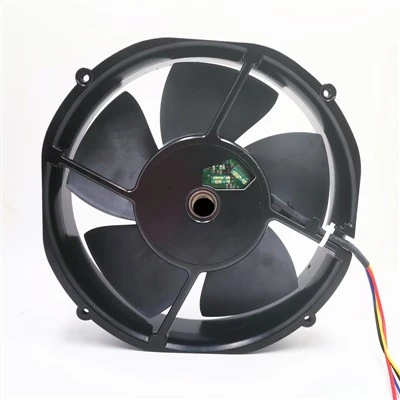
When it comes to industrial cooling solutions, industrial cooling fans are often one of the first options that come to mind. As an established supplier of industrial cooling fans, I’ve seen firsthand the benefits they bring to various industrial settings. These fans are known for their ability to provide a cost – effective and relatively simple way to move air and dissipate heat. However, like any technology, using an industrial cooling fan alone has its limitations. In this blog, I’ll delve into these limitations to help you make more informed decisions about your industrial cooling needs. Industrial Cooling Fan
1. Limited Cooling Capacity
One of the most significant limitations of using an industrial cooling fan alone is its restricted cooling capacity. Industrial cooling fans primarily work by moving air around. They create a wind – chill effect, which can make the environment feel cooler, but they do not actually lower the temperature of the air. In high – heat industrial environments, such as foundries, steel mills, or large – scale manufacturing plants where equipment generates intense heat, the cooling effect of a fan may be negligible.
For instance, in a foundry, the molten metal can produce extremely high temperatures that far exceed the cooling ability of a fan. The fan can only circulate the hot air, but it cannot remove the heat at a rate sufficient to maintain a safe and comfortable working temperature. In such cases, additional cooling methods like air – conditioning systems or refrigeration units are often required to achieve the desired temperature reduction.
Even in less extreme industrial settings, if the heat load is high due to a large number of heat – generating machines or a high – density workspace, a single industrial cooling fan may not be enough. The fan might struggle to distribute the air evenly throughout the area, leaving some spots with poor ventilation and high temperatures.
2. Dependence on Ambient Conditions
Industrial cooling fans are highly dependent on ambient conditions. Their effectiveness is directly related to the temperature and humidity of the surrounding air. In hot and humid environments, the cooling effect of a fan can be significantly reduced.
When the humidity is high, the sweat on the skin evaporates more slowly. Since the wind – chill effect created by the fan relies on the evaporation of sweat to cool the body, the cooling sensation is diminished. In industrial settings where workers need to be comfortable to maintain productivity and safety, this limitation can be a major issue.
Moreover, if the ambient air temperature is already very high, the fan is simply blowing hot air around. This not only fails to provide effective cooling but can also make the working environment feel stuffy and uncomfortable. For example, in tropical regions during the summer months, where high temperatures and humidity are common, an industrial cooling fan may not be able to offer any real relief to workers.
3. Inability to Control Air Quality
Another drawback of relying solely on an industrial cooling fan is its inability to control air quality. Industrial environments often contain a variety of pollutants such as dust, fumes, and chemicals. A cooling fan only moves the air; it does not filter or purify it.
In a manufacturing plant that produces fine dust particles, using a fan alone can cause the dust to be circulated throughout the workspace. This can pose serious health risks to workers, including respiratory problems, allergies, and even long – term diseases like silicosis. In addition, the presence of dust can also damage the equipment in the facility, leading to increased maintenance costs and potential breakdowns.
Similarly, in industries where chemical fumes are released, a fan will simply spread these harmful fumes around, rather than removing them from the air. This can create a hazardous working environment and may even violate safety regulations.
4. Noise and Vibration Issues
Industrial cooling fans can generate a significant amount of noise and vibration. The large – scale fans used in industrial settings typically have powerful motors and large blades, which produce a loud humming or whirring sound when in operation. This noise can be a major distraction for workers, affecting their concentration and productivity.
In addition, excessive noise can also lead to hearing problems over time. Workers in industrial facilities are often exposed to high – noise levels for long periods, and the noise from cooling fans can contribute to this overall noise exposure.
Vibration is another issue associated with industrial cooling fans. The continuous movement of the fan blades can cause vibrations that are transmitted to the surrounding structures. Over time, these vibrations can loosen bolts and connections, leading to structural damage and maintenance issues. In some cases, the vibration can even interfere with the operation of sensitive equipment in the facility.
5. Limited Reach and Coverage
Industrial cooling fans have a limited reach and coverage area. The effectiveness of a fan decreases rapidly as the distance from the fan increases. Even large industrial fans can only provide effective air movement within a certain radius.
In a large industrial warehouse or factory, a single fan may not be able to cover the entire space. There will be areas that are far away from the fan where the air circulation is poor. This can result in uneven temperature distribution, with some parts of the facility being too hot while others are relatively cooler.
To achieve uniform cooling in a large area, multiple fans may need to be installed. However, this can increase the cost of installation and energy consumption. Additionally, coordinating the operation of multiple fans to ensure even air distribution can be a complex task.
6. Energy Efficiency Concerns
While industrial cooling fans are generally considered more energy – efficient than some other cooling systems, using them alone may not always be the most energy – efficient solution in the long run. In situations where the cooling requirements are high, running multiple fans continuously can consume a significant amount of electricity.
Moreover, if the fans are not properly sized or installed, they may operate inefficiently, wasting even more energy. For example, if a fan is too large for the space it is supposed to cool, it will consume more power than necessary without providing any additional cooling benefits. On the other hand, if a fan is too small, it will have to run at full capacity for longer periods to achieve the desired effect, also leading to increased energy consumption.
Despite these limitations, industrial cooling fans still have their place in many industrial applications. They can be an important part of a comprehensive cooling strategy when used in combination with other cooling technologies. For applications where the heat load is relatively low, the ambient conditions are favorable, and air quality is not a major concern, industrial cooling fans can provide a cost – effective and reliable cooling solution.
If you’re facing challenges in your industrial cooling needs and are unsure whether an industrial cooling fan alone is the right choice, I’d be more than happy to help. Our team of experts has extensive experience in providing customized industrial cooling solutions. We can assess your specific requirements, take into account factors such as heat load, ambient conditions, and space constraints, and recommend the most suitable combination of cooling technologies for your facility.
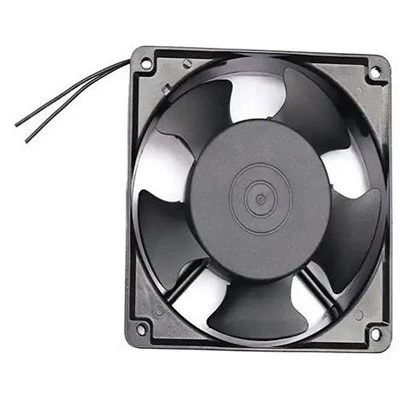
AC Axial Fan Don’t let the limitations of using an industrial cooling fan alone hold you back. Reach out to us to discuss your industrial cooling needs. We can work together to develop a cooling solution that maximizes efficiency, improves comfort, and ensures the safety of your workers.
References
- ASHRAE Handbook – Fundamentals. American Society of Heating, Refrigerating and Air – Conditioning Engineers.
- Industrial Ventilation: A Manual of Recommended Practice. American Conference of Governmental Industrial Hygienists.
- "The impact of industrial environment on worker health and productivity". Journal of Industrial Hygiene and Toxicology.
Dongguan Shengzhirong Electronics Co., Ltd.
As one of the most professional industrial cooling fan manufacturers and suppliers in China, our products have good reputation in the market. Please rest assured to wholesale high quality industrial cooling fan made in China here from our factory. Customized orders are welcome.
Address: 6/F, Building 2, No.68, Shunxing 2nd Road, Dajingtou 2nd Industrial Zone, Dalang Town, Dongguan City, Guangdong, China
E-mail: szr_coolingfan@163.com
WebSite: https://www.szrfan.com/
