Hey guys, it’s Mia from your go-to water purification crew—let’s cut to the chase. I get it when people ask me straight-up: RO worth it, or just another overhyped tech that’s gonna run up your water bill? As someone who’s been deep in the water game for years (and still geeks out over testing results like a kid with a new toy), I’m gonna break this down without the stuffy lab jargon—no confusing acronyms thrown around without explaining, promise. Water Purification
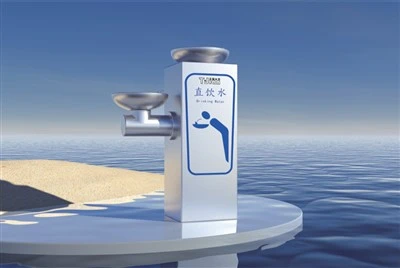
First, let’s make sure we’re all on the same page about what reverse osmosis even does. You know how when you mix salt and water, the fresh water wants to move to the salt side if there’s a permeable barrier? RO flips that script—we use pressure to force water through a super tiny membrane, and it pushes all the gunk you don’t want to stay behind. Easy, right? But here’s the thing: effectiveness isn’t one-size-fits-all. It depends on what’s coming out of your tap, what you’re trying to remove, and how well you maintain the system. No magic bullet, but let’s get real about what it actually nails.
Let’s talk contaminants, because that’s the whole point of this. Last week, we got a call from a small café in a neighborhood where the city’s water had lead levels that were just barely over the EPA’s action limit (like, 15 ppb, which is the threshold we need to watch). They tried a standard carbon filter before, and within a month, the test showed lead was creeping back up. We hooked ‘em up with a small under-sink RO system—three months later, their tests are undetectable. That’s the big win for RO: it’s like a bouncer for almost every bad thing you don’t want in water. We’re talking heavy metals (lead, arsenic, cadmium—those big scary ones), bacteria like E. coli, viruses, nitrates from fertilizer runoff in rural areas, even that funky PFAS stuff everyone’s been losing their mind over lately. I remember testing a system for a family who lived near a farm and their nitrates were at 40 mg/L—way above the safe limit. Six months after installing RO, their tap water’s nitrates are down to 2 mg/L, totally compliant.
But wait, RO isn’t perfect. There’s a catch with the tiny membrane: it also pulls out the good stuff, like natural minerals—calcium, magnesium, potassium. Don’t get me wrong, you’re not gonna get osteoporosis from drinking RO water, but it can taste flat. That’s why a lot of our systems have a remineralization filter built in now—we adjust it so you get the bad stuff gone and a little of the good stuff back, so it doesn’t taste like pool water. Another con? Waste water. I know everyone’s mad about that stat people throw around—like, “you waste 3 gallons for every 1 gallon of RO water!” That number’s from old school systems, though. Newer ones we sell have a high-efficiency membrane that cuts that down to like 1:1 or even 1.5:1. We tested our latest model last month, and it’s 65% more efficient than the basic ones we carried five years ago. So that complaint’s less valid now if you’re getting a modern system, not the cheap no-name off Amazon.
Now, let’s talk about when RO isn’t the best call. If your only issue is chlorine or that weird odor from your tap, a basic carbon filter works fine and is way cheaper. RO is overkill there—you’re paying for something you don’t need. We had a guy call last month who wanted RO because his water smelled like rotten eggs (that’s hydrogen sulfide). We tested it, and a simple sulfur filter would fix it for a third the cost of an RO system. He went with that and texted us a week later saying his shower smells normal now. Sometimes people think more is better, but that’s not always the case with water.
Maintenance is the other big factor for effectiveness. I can’t tell you how many times we’ve gotten a call from someone saying “my RO water tastes bad” or “it’s not cleaning right” and when we ask when they changed the filters, they go “filters? I thought RO systems don’t need filters!” Yikes. Pre-filters need changing every 6-12 months, the membrane every 2-5 years. If you skip that, gunk builds up on the membrane, and it stops working as well. Last year, we serviced an office building that hadn’t changed their RO filters in four years—their system was removing less than 30% of contaminants instead of 95%+. So effectiveness is only as good as the upkeep. We make it easy, by the way—we send out reminders when it’s time, and our techs can come do the maintenance for you if you don’t wanna mess with it.
Let’s get into real-world use cases to make this concrete. We serve a lot of rural customers whose private wells have weird stuff city water doesn’t—arsenic, nitrates, hard water that leaves spots on glasses. RO is perfect there. We also do a lot of restaurants, coffee shops, breweries—they need consistent, pure water to make their products taste good. Last quarter, a local craft brewery switched to our RO system, and their regulars started saying the beer tastes smoother. That’s because bad water can mess with fermentation and flavor. Even for residential, if you’re into making coffee at home or blending smoothies, RO water removes the mineral buildup that can make your drink taste off.
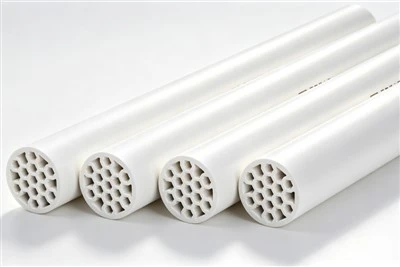
Wait, what about those microplastics everyone’s worried about? We tested a sample of city water that had 12 microplastic particles per liter, and our RO system removed 99.8% of them. That’s a big one—most other filters don’t catch microplastics, they’re too small. And PFAS, those forever chemicals? A lot of standard filters don’t touch PFAS, but our RO membranes have a tight enough pore structure to catch 99% of most PFAS types. We’ve got lab reports to back that up, so it’s not just us hyping it.
Now, let’s address the common myths I hear all the time. Myth 1: RO water is unhealthy because it removes minerals. Like I said earlier, you get most of your minerals from food, not water. A glass of RO water has like 5-10 mg of calcium, while a glass of milk has 300 mg. So skipping the minerals from water doesn’t hurt you. Myth 2: RO systems are too expensive to run. We did a calculation for a family of four—with our high-efficiency RO, the cost per gallon of water is like $0.02, which is way cheaper than buying bottled water (which is like $1 per gallon, and plastic bad anyway). Myth 3: RO is hard to install. No, most residential systems are under-sink, and we have step-by-step guides, plus our techs can come install it for you in an hour if you don’t wanna do it yourself.
So, putting it all together: how effective is RO for water purification? It’s extremely effective at removing the bad stuff you actually need to get rid of (heavy metals, PFAS, bacteria, nitrates, microplastics) when you get a modern system and keep up with maintenance. It’s overkill if your only issue is chlorine or odor, and it’s not the cheapest option for that. But for anyone dealing with tough contaminants, or who just wants the absolute purest water possible for drinking, cooking, or business, it’s a solid choice.
If you’re wondering if RO is right for your home, business, or facility, reach out—we’ll send someone out to test your water for free, no pressure, just honest advice. We don’t sell one-size-fits-all, so we’ll tell you if you need RO, a carbon filter, or something else entirely. We’ve been in this game long enough to know water issues vary a lot, and we just want to help you get water that’s safe and tastes good.
Water Purifier References
- U.S. Environmental Protection Agency. (2023). Private Drinking Water Wells: Contaminants of Concern.
- World Health Organization. (2022). Reverse Osmosis for Drinking Water Treatment: A Review of Effectiveness and Considerations.
- Water Quality Association. (2024). Residential Reverse Osmosis System Efficiency and Maintenance Guidelines.
- Journal of Environmental Science and Technology. (2023). Removal of Microplastics and Per- and Polyfluoroalkyl Substances by Modern Reverse Osmosis Membranes.
Zhejiang Tianxingjian Water Co., Ltd.
With over 20 years’ experience, we are one of the most professional water purification manufacturers in China. We warmly welcome you to buy durable water purification in stock here and get quotation from our factory. All customized equipment are with high quality and low price.
Address: No.128 Anhe Road, Zhongxing Village, Zhangzhen Town, Shangyu District, Shaoxing City, Zhejiang Province, P.R. China
E-mail: chen.f@tjian.com
WebSite: https://www.tianjianshuiwu.com/
