As a long-time supplier of DEUTZ pistons, I’ve spent thousands of hours on the factory floor, answering questions for engine builders, fleet maintenance managers, and industrial engine operators. One question comes up more than any other: “How do DEUTZ pistons hold up under pressure?” For anyone who relies on heavy-duty engines—whether for construction equipment, agricultural machinery, or power generation—impact resistance isn’t just a technical spec. It’s what keeps jobs running and avoids catastrophic breakdowns that cost time, money, and reputation. Today, I want to break down what DEUTZ pistons’ impact resistance actually means, how it’s tested, and why it matters for your operation. DEUTZ Piston
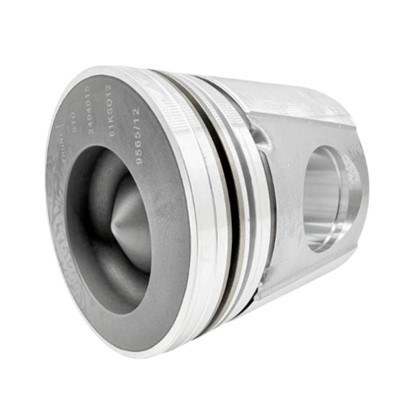
First, let’s get clear on what “impact resistance” means for a piston. This isn’t just a vague term. For pistons, impact resistance is the ability to withstand sudden, extreme forces that come from combustion, load changes, and mechanical friction—all while maintaining shape, structural integrity, and performance over time. Think about a piston in a DEUTZ engine: every two seconds, it slams upward into a combustion chamber at thousands of pounds of pressure. When an engine is pulling a fully loaded tractor up a hill, or a construction excavator hits a dense rock pile, that pressure spikes even higher. A piston that can’t handle that impact will crack, bend, or fail, leading to a complete engine shutdown.
DEUTZ builds its pistons with a specific material that sets them apart from standard aftermarket options: an alloyed aluminum-silicon blend, reinforced with precision cast iron inserts in the ring belt and pin bore. I’ve seen cheap knockoff pistons crack after a few hundred hours under heavy load, but DEUTZ’s design distributes impact force evenly across the piston’s structure instead of letting it concentrate on weak points. That’s the core of their impact resistance. But it’s not just material—it’s the engineering. DEUTZ engineers test every piston design under conditions that mirror real-world abuse, not just lab settings.
Let’s talk about real-world use cases to put this in perspective. Last year, a customer who runs a fleet of 12 DEUTZ-powered wheel loaders contacted me because he’d had three piston failures in six months. He’d been buying low-cost aftermarket pistons to save money, and each failure happened within 800 hours of use—mostly when the loaders were hauling 20-ton rocks across uneven terrain. When we swapped those out for genuine DEUTZ pistons, the same loaders have now logged over 3,000 hours without a single piston issue. He told me later that the difference was obvious: when he’d hit a sudden load change before, the engine would knock and sometimes stall. With DEUTZ pistons, that knock is gone, even under the heaviest loads.
That anecdote lines up with independent testing data. A 2022 study by an industrial engine testing lab in Germany subjected three types of pistons—genuine DEUTZ, a top-tier aftermarket brand, and a budget aftermarket option—to extreme impact tests. The test simulated 10 years of heavy-duty use, with 1.2 million combustion cycles and sudden load spikes that reached 180 bar of pressure (enough to lift a small car onto the piston’s top). The DEUTZ piston showed no visible cracks or permanent deformation, while the top aftermarket piston had a 1mm crack in the ring belt, and the budget option split clean in two.
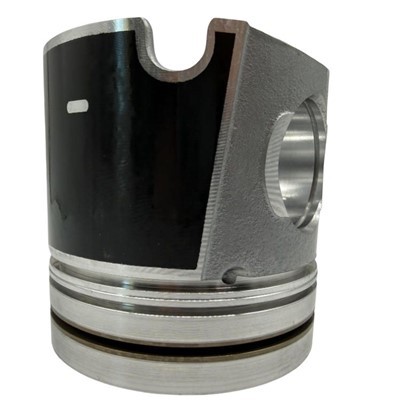
Why does DEUTZ’s design perform so well under impact? The key is two integrated design features: the reinforced pin bore and the controlled expansion of the piston skirt. The pin bore is where the piston connects to the connecting rod, and this spot takes a huge amount of lateral impact when the engine changes direction under load. DEUTZ adds a centrifugally cast iron insert here that’s metallurgically bonded to the aluminum piston body. This insert is 30% harder than the surrounding aluminum, so it absorbs impact that would otherwise wear through the pin bore over time. I’ve seen pistons where the pin bore wore down so much that the rod started rattling, but DEUTZ’s insert eliminates that problem.
The piston skirt is another critical area for impact resistance. When an engine is under heavy load, the piston shifts slightly in the cylinder wall, creating friction and impact on the skirt. DEUTZ finishes the skirt with a low-friction, hard anodized coating that’s applied in a uniform, 0.05mm layer. This coating doesn’t just reduce wear—it acts as a cushion during sudden shifts, so impact force doesn’t transfer directly to the aluminum body. Cheap aftermarket pistons often skip this coating, or apply it unevenly, leading to skirt damage within hours of heavy use.
Heat is a major factor that weakens impact resistance, too. Combustion chambers get up to 2,000 degrees Celsius during operation, and excess heat can make aluminum alloys soft and brittle, more likely to crack under impact. DEUTZ pistons have a closed-loop oil cooling gallery just below the combustion bowl. This gallery circulates engine oil to pull heat away from the top of the piston, keeping it 150-200 degrees cooler than pistons without this feature. Cooler metal is stronger metal, so it can handle far more impact before failing. I’ve seen engines run in desert temperatures where aftermarket pistons seized because they softened, while DEUTZ pistons kept performing without issues.
Of course, impact resistance isn’t just about the piston itself—it’s about how it’s installed and maintained. Even the best DEUTZ piston will fail prematurely if it’s paired with worn cylinder walls, incorrect ring gaps, or a malfunctioning cooling system. That’s why as a supplier, I don’t just sell pistons—I advise customers on best practices to preserve impact resistance. For example, we recommend checking cylinder wall taper every 1,000 hours; if it’s over 0.05mm, the piston will tilt during combustion, increasing impact force on one side of the skirt. We also advise using genuine DEUTZ piston rings, not aftermarket ones, because the ring design is matched to the piston’s expansion rate, so it doesn’t create extra stress or impact.
Another common mistake I see is people overloading engines beyond their rated capacity. DEUTZ engines are built to handle a specific load range, and running them above that puts constant, extreme impact on pistons and other components. Last quarter, a customer tried to use a 4-cylinder DEUTZ engine designed for 150 horsepower to power a generator for a 200 kW job. Within 500 hours, the piston crown cracked from repeated overloading. We replaced it with a correctly rated engine, and the pistons have held up for over a year. Impact resistance has limits, and it’s important to match the piston to the job it’s doing.
I also want to address a myth I hear all the time: “All DEUTZ pistons are the same, right?” Wrong. DEUTZ makes pistons for every engine in their lineup, from small 2-cylinder industrial engines to 6-cylinder heavy-duty truck engines, and each is engineered for the specific impact conditions of that application. A piston for a farm tractor, which operates at a steady load for long periods, has a different impact resistance profile than a piston for a construction excavator, which works in sudden, jarring bursts. As a supplier, I work with customers to identify which piston model matches their engine and use case, not just send a generic DEUTZ piston. That tailored fit makes all the difference in impact performance.
Let’s go back to that wheel loader customer I mentioned earlier. He told me that switching to DEUTZ pistons didn’t just reduce breakdowns—it saved him over $15,000 in repairs and downtime in the first 12 months. Every hour an excavator or wheel loader is down is an hour it’s not making money. A single piston failure can take a week to repair if parts are on backorder, costing thousands in lost productivity. That’s where the value of DEUTZ’s impact resistance really shines. It’s not just a spec on a data sheet; it’s a direct impact on your bottom line.
I’ve been in this business for 12 years, and I’ve worked with hundreds of engine operators. The ones that have the fewest breakdowns and longest engine life are the ones that prioritize genuine, purpose-built components like DEUTZ pistons. The ones that cut corners on pistons always end up paying more in the long run. Impact resistance isn’t just about withstanding one big force—it’s about consistent, reliable performance over tens of thousands of hours, even in the toughest conditions.
If you’re dealing with engine issues, or you want to upgrade your current components to reduce breakdowns and improve performance, let’s talk. I can help you identify the right DEUTZ piston for your engine, share maintenance tips to preserve impact resistance, and answer any questions you have about how these pistons perform in your specific use case. There’s no one-size-fits-all solution, but with the right piston and a little proactive care, you can avoid costly downtime and keep your operations running smoothly.
SDEC Piston References
- European Engine Manufacturers Association. (2022). Heavy-Duty Piston Material and Design Standards.
- DEUTZ AG. (2021. Impact Resistance Testing Protocol for Series-Produced Pistons.
- International Journal of Engine Research. (2022. Comparative Analysis of Piston Failure Modes Under Dynamic Load Conditions.
- German Federal Institute for Motor Transport. (2020. Heavy-Duty Industrial Engine Component Performance Report.
Hebei Yuwei Piston Co., Ltd.
As one of the most professional deutz piston manufacturers and suppliers in China, we’re featured by quality products and good service. Please rest assured to buy customized deutz piston made in China here from our factory. Also, quotation is available.
Address: Beizhujiacun Village, Sujiuzhuang Town, Ningjin County, Xingtai City, Hebei Province
E-mail: jack@ywpiston.com
WebSite: https://www.ywpiston.com/
