As a multi-function meter supplier, I spend a lot of time talking with building managers, facility engineers, and sustainability directors who are juggling rising energy costs, regulatory pressure to cut carbon emissions, and the constant challenge of keeping operations running smoothly. One question I get more than any other is: What’s the most practical, actionable way to get a handle on a building’s power use? Too many teams still rely on outdated tools—like separate meters for different systems, manual logbooks, or spreadsheets that take days to compile. That’s where multi-function meters (MFM) come in. These aren’t the basic electricity meters you might have installed when a building was built. Modern MFMs measure not just voltage and current, but power factor, harmonic distortion, reactive power, and real-time energy use across every circuit, zone, and piece of equipment. The data they produce is the foundation for smart, cost-effective power management strategies that actually work. Over the past five years, I’ve seen dozens of buildings turn that data into tangible savings—some as much as 25% on annual energy bills—by using MFMs strategically. Today, I want to break down the core strategies I recommend, the mistakes I see teams making, and why partnering with a trusted MFM supplier is the key to making these strategies stick. Multi Function Meter

First, let’s start with the basics: if an MFM is just installed in the main electrical panel, you’re only scratching the surface. The biggest mistake I see is treating MFMs as a “set-it-and-forget-it” tool. To turn power management into a continuous process, you need to install MFMs strategically across critical points in the building, not just one central location. That means sub-panels for HVAC systems, lighting zones, elevators, kitchen equipment, server rooms, and even individual tenant spaces in multi-tenant buildings. For example, last year I worked with a 12-story office building in downtown Chicago that was blowing its budget on HVAC energy. The initial MFM was only installed on the main panel, so the facility team had no way of knowing which of three HVAC chillers was running inefficiently, or if one was pulling extra power during off-hours when it shouldn’t have been. Once we installed 14 additional MFMs on each chiller’s sub-panel and the air handling units on each floor, they discovered that one chiller was operating at a 0.72 power factor (an ideal is 0.95 or higher) due to a faulty capacitor bank. Fixing that capacitor reduced the chiller’s energy use by 18%—saving the building more than $12,000 a year. That’s the kind of insight you can only get by granular MFM data, not broad, aggregate numbers. The strategy here is simple: map out your building’s most energy-intensive loads, and install MFMs on each of those loads, not just the main service. For larger buildings or campuses, modular MFMs that sync wirelessly to a central cloud platform make this easy—you don’t have to run miles of ethernet cable to every panel, which cuts installation time and cost by 30% on average, per data from the National Institute of Building Sciences.
The second strategy is real-time load monitoring and anomaly detection. A multi-function meter doesn’t just collect data—it sends alerts when something is off. Think about it: a building’s HVAC system shouldn’t be using 30% more power than its average on a Tuesday afternoon, or a refrigeration unit in a grocery store shouldn’t cycle on and off every 10 minutes. These anomalies aren’t just minor inefficiencies—they’re warning signs of equipment failure, which leads to costly emergency repairs and unplanned downtime. I had a conversation with a supermarket chain manager in Houston last year who told me he’d had a compressor fail in one of his cold storage units at 2 a.m. on a Saturday. By the time a technician arrived on Monday, $8,000 worth of food had spoiled. We equipped that store with MFMs on all refrigeration units, and within three months, the MFM flagged a gradual 15% increase in power use from a compressor that was starting to fail. The team scheduled a repair during regular business hours, avoiding not just the food loss but the after-hours service call fees. Modern MFMs use built-in algorithms to recognize normal load patterns—so you don’t have to adjust every alert threshold manually. For example, during a weekday, a server room will have a steady load, but during a weekend system update, load might spike temporarily. The MFM learns that pattern and ignores it, but alerts you to an unexpected spike that lasts for more than 15 minutes. The key here is to not just use MFM data for monthly or quarterly audits—use it as a daily tool that catches issues before they become crises.
Third, optimizing power factor and reducing reactive power waste. This is a concept that a lot of building teams have heard of, but few actually implement correctly, mostly because they don’t have the data to target where the waste is. Power factor is the ratio of actual working power (the power that runs lights, equipment, and HVAC) to apparent power (the total power drawn from the grid). A low power factor means you’re paying for power that doesn’t do any useful work—reactive power, which is needed to power magnetic devices like motors, transformers, and compressors. Many utility companies charge a penalty for a power factor below 0.9, which is an extra line item on every energy bill. MFMs measure power factor for every circuit, which lets you pinpoint where the low power factor is coming from, not just assume it’s the entire building. For example, a manufacturing plant I worked with in Detroit had a $45,000 annual power factor penalty. Their main MFM showed a building-wide power factor of 0.82, so they installed a single large capacitor bank at the main panel— but that only helped slightly. When we installed MFMs on each of their 12 production machines, they discovered that three old assembly line motors had power factors below 0.65 each, which was dragging down the entire building’s average. Installing smaller, targeted capacitor banks on those three motors fixed the issue, and their power factor jumped to 0.96, eliminating the penalty entirely. That’s a $45,000 savings for less than $5,000 in equipment costs. The takeaway here: MFMs take a vague, abstract concept like power factor and turn it into a solvable problem by showing you exactly where to focus.
Fourth, integrating MFM data with your building automation system (BAS) for automated control. A multi-function meter is only as useful as what you do with its data. Many teams collect MFM data, export it to a spreadsheet, and manually adjust settings—but that’s time-consuming and easy to get wrong. The best power management comes when MFM data syncs directly with your BAS, so adjustments are automated. For example, if an MFM detects that a conference room’s lighting is still running at full power when no one is in the space (via a scheduled sensor feed), the BAS can dim or turn off the lights automatically. Or if an MFM on a chiller shows that the evaporator coils are getting dirty, the BAS can alert the maintenance team to schedule a cleaning before the efficiency drops, instead of waiting for a quarterly check. I worked with a 50,000-square-foot mixed-use building in Austin that integrated its MFMs with its BAS two years ago. Before that, the building’s common area lighting was kept at full brightness 24/7, even on weekends when the retail spaces on the ground floor were closed. With automated control tied to MFM data showing unused load, the building cut lighting energy use by 28% and reduced HVAC runtime in unoccupied zones by 19%. The big advantage here is that this integration doesn’t require a full overhaul of your existing BAS—most modern MFMs work with standard protocols like Modbus or BACnet, so you can connect them without ripping out old hardware. The key is to partner with an MFM supplier who can help with that integration, not just sell you the meters. A lot of cheap MFMs on the market are proprietary, so you can’t sync them with third-party systems— that’s a short-term cost saving that leads to long-term frustration.
Fifth, tenant sub-metering for multi-tenant buildings. If you own or manage an apartment complex, office park, or retail mall, sub-metering is a game-changer for fair billing and reducing overall building energy waste. Many multi-tenant buildings have a single master meter, so the landlord pays for all energy and splits the cost among tenants, usually with an average charge per square foot. That creates an incentive for tenants to waste energy, since they don’t see the direct cost of leaving space heaters on or running extra equipment. MFMs installed in each tenant’s space let you bill them for actual, real energy use, which encourages conservation. But it’s not just about billing—sub-meter data also helps you identify high-usage tenants or patterns that signal waste. For example, a 10-unit apartment building in Phoenix I worked with had some tenants using 30% more electricity than others, even with similar square footage. Sub-meter data from MFMs showed that two tenants were running old, inefficient air conditioners that used twice as much power as newer models. The landlord offered to replace those AC units at a discounted rate, and within a year, the building’s overall energy use dropped by 12%. Another benefit: sub-meter data gives you leverage when negotiating utility rates. Utilities often offer lower rates for buildings that have accurate granular energy data, because it shows you’re a responsible user who is actively managing consumption.
Now, let’s talk about common pitfalls I see teams falling into when implementing these strategies. The first is choosing the wrong MFM. I’ve seen buildings buy cheap, basic MFMs that only measure total power, not harmonic distortion or power factor, and they wonder why they can’t solve their energy issues. A true multi-function meter should measure at minimum: voltage (phase and line), current, real power, apparent power, reactive power, power factor, frequency, and energy consumption (kWh). Harmonic measurement is also critical for identifying issues with non-linear loads like LED lighting, variable frequency drives, and server equipment. Another pitfall is not training your team to use the data. I’ve had customers who installed top-of-the-line MFMs, got dozens of data alerts, and then ignored them because their maintenance team didn’t know what the alerts meant. A good MFM supplier will offer on-site training or remote support to help your team interpret data, set up alerts, and turn insights into action. Finally, don’t wait for a full retrofit to start small. You don’t have to install MFMs on every circuit in the building on day one. Start with the top three energy-intensive systems—HVAC, lighting, and refrigeration—measure their use for a quarter, identify low-hanging fruit, then expand. That way, you see quick wins that build buy-in from leadership, which makes it easier to invest in more MFMs down the line.
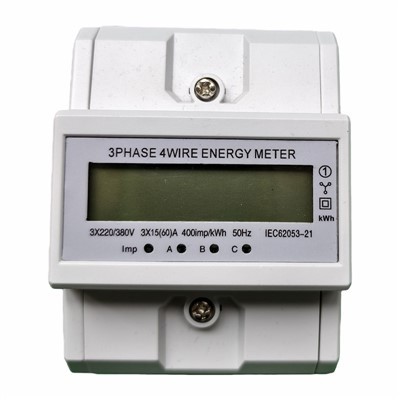
At the end of the day, power management isn’t about complex technology—it’s about having clear, reliable data about how your building uses energy. A multi-function meter isn’t just a tool for tracking bills; it’s a proactive asset that helps you cut costs, reduce carbon emissions, avoid equipment failures, and create a more efficient, sustainable building. If you’re ready to start turning your building’s power data into tangible results, don’t hesitate to reach out for a procurement consultation to discuss your specific needs and find the right MFM solution for your space.
Electronic Energy Meter References
International Energy Agency. (2021). Smart Meters for Energy Efficiency in Commercial Buildings. IEA Publications.
National Institute of Building Sciences. (2022). Whole Building Design Guide: Energy Metering Strategies. NIBS.
U.S. Department of Energy. (2020). Advanced Power Management for Commercial Buildings. DOE Office of Energy Efficiency & Renewable Energy.
Harvey, L. D. D. (2019). Energy Efficiency and Management in Buildings. Routledge.
Zhejiang Qunte New Energy Technology Co., Ltd.
As one of the most professional multi function meter manufacturers in China, we’re featured by quality products and good price. Please rest assured to buy discount multi function meter made in China here from our factory. We also accept customized orders.
Address: No. 56, Fengxi Road, Tang’ao Yu Village, Liushi Town, Yueqing City, Wenzhou City, Zhejiang Province
E-mail: 251951196@qq.com
WebSite: https://www.zjqtmeter.com/
