As a supplier of Bidirectional Trigger Diodes (BTDs), I’ve witnessed firsthand the diverse applications of these remarkable electronic components. One of the most fascinating and rapidly growing areas where BTDs play a crucial role is in wind turbine technology. In this blog post, I’ll delve into the wind turbine application of Bidirectional Trigger Diodes, exploring how they contribute to the efficient and reliable operation of wind energy systems. Bidirectional Trigger Diode

Understanding Bidirectional Trigger Diodes
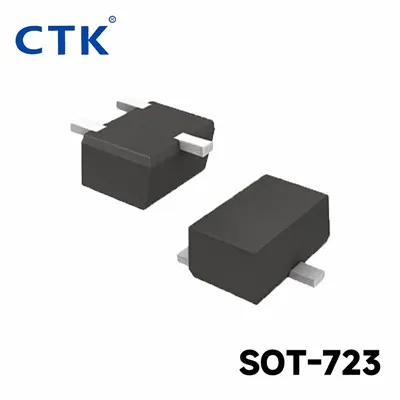
Before we explore their application in wind turbines, let’s briefly understand what Bidirectional Trigger Diodes are. A BTD is a semiconductor device that conducts current only after the voltage across it reaches a certain specified value, known as the trigger voltage. Once triggered, it allows current to flow in either direction, hence the term "bidirectional." This unique characteristic makes BTDs ideal for applications where precise control of voltage and current is required, such as in switch mode power supplies, phase control circuits, and, of course, wind turbines.
The Role of BTDs in Wind Turbines
Wind turbines are complex machines that convert the kinetic energy of the wind into electrical energy. To ensure their efficient and reliable operation, various control and protection systems are employed. Bidirectional Trigger Diodes are used in several key areas within these systems, including pitch control, yaw control, and overvoltage protection.
Pitch Control
Pitch control is a critical function in wind turbines that involves adjusting the angle of the blades to optimize the power output and protect the turbine from excessive wind speeds. By changing the pitch angle of the blades, the turbine can capture more or less wind energy, depending on the wind conditions. Bidirectional Trigger Diodes are used in the pitch control system to provide precise triggering of the control circuits.
In a typical pitch control system, the BTD is connected in series with a capacitor and a resistor. When the wind speed exceeds a certain limit, the voltage across the BTD reaches the trigger voltage, causing it to conduct current. This current flow triggers the control circuit, which then adjusts the pitch angle of the blades to reduce the aerodynamic load on the turbine. By providing accurate and reliable triggering, BTDs ensure that the pitch control system responds quickly and effectively to changes in wind speed, helping to maintain the stability and efficiency of the turbine.
Yaw Control
Yaw control is another important function in wind turbines that involves orienting the turbine nacelle (the housing that contains the generator, gearbox, and other components) to face the wind. By keeping the turbine aligned with the wind direction, the yaw control system maximizes the power output of the turbine. Bidirectional Trigger Diodes are used in the yaw control system to provide feedback and control signals.
In a yaw control system, the BTD is used to detect the position of the turbine nacelle relative to the wind direction. When the nacelle is misaligned with the wind, the voltage across the BTD changes, indicating the need for adjustment. This signal is then used to trigger the yaw drive system, which rotates the nacelle to align it with the wind. By providing accurate and reliable position sensing, BTDs help to ensure that the yaw control system operates smoothly and efficiently, maximizing the power output of the turbine.
Overvoltage Protection
Wind turbines are exposed to a variety of electrical disturbances, including lightning strikes, power surges, and voltage fluctuations. These disturbances can cause damage to the turbine’s electrical components, leading to costly repairs and downtime. Bidirectional Trigger Diodes are used in the overvoltage protection system to protect the turbine from these electrical disturbances.
In an overvoltage protection system, the BTD is connected in parallel with the electrical equipment that needs to be protected. When the voltage across the BTD exceeds the trigger voltage, it conducts current, diverting the excess voltage away from the protected equipment. This helps to prevent damage to the equipment and ensures the safe and reliable operation of the turbine.
Advantages of Using BTDs in Wind Turbines
The use of Bidirectional Trigger Diodes in wind turbines offers several advantages, including:
- Precise Control: BTDs provide precise triggering of control circuits, allowing for accurate and reliable operation of the pitch control, yaw control, and overvoltage protection systems.
- High Reliability: BTDs are solid-state devices that have no moving parts, making them highly reliable and resistant to mechanical stress and vibration.
- Low Cost: BTDs are relatively inexpensive compared to other electronic components, making them a cost-effective solution for wind turbine applications.
- Easy Integration: BTDs are easy to integrate into existing wind turbine control systems, requiring minimal modifications to the hardware.
Conclusion
In conclusion, Bidirectional Trigger Diodes play a crucial role in the efficient and reliable operation of wind turbines. By providing precise control, high reliability, low cost, and easy integration, BTDs are an ideal solution for pitch control, yaw control, and overvoltage protection systems in wind energy systems. As the demand for renewable energy continues to grow, the use of BTDs in wind turbines is expected to increase, making them an important component in the future of clean energy.
Transistors If you’re interested in learning more about the wind turbine application of Bidirectional Trigger Diodes or are looking for a reliable supplier of BTDs for your wind energy project, please don’t hesitate to contact us. We’d be happy to discuss your specific requirements and provide you with the best solutions for your needs.
References
- "Wind Turbine Technology: Fundamental Concepts of Wind Turbine Engineering" by J. F. Manwell, J. G. McGowan, and A. L. Rogers.
- "Power Electronics for Renewable Energy Systems, Transportation and Industrial Applications" by Bimal K. Bose.
- "Semiconductor Devices: Physics and Technology" by S. M. Sze.
Tongke Electronic Co., Ltd
Tongke Electronic Co., Ltd. is one of the most experienced bidirectional trigger diode manufacturers and suppliers in China, featured by quality products and low price. Please rest assured to wholesale advanced bidirectional trigger diode made in China here from our factory. Contact us for pricelist.
Address: No.3,Chayuan Rd, Street 3, AilingKan, Dalingshan, Dongguan, Guangdong, China.
E-mail: jack@ctk-elec.com
WebSite: https://www.ctkchip.com/
