Hey everyone, let’s cut to the chase – if you’re a drummer (just starting out or crushing gigs), you’ve definitely faced the same question I did when I first built my brand: should I grab a regular practice drum, or shell out for a Screen Drum? As a Screen Drum supplier who’s worked with drummers of all skill levels over the last few years, I’ve tested both to within an inch of their lives, talked to hundreds of players, and dug into the actual science behind how each works. Today, we’re breaking this down real, no B.S., so you don’t waste cash on something that doesn’t fit your vibe. Screen Drum
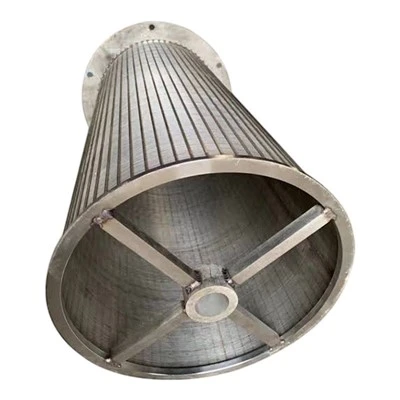
First, let’s stop and define what each drum actually is, because a lot of people mix these up. A standard silent practice drum (the cheap, ubiquitous kind) is basically a 12-inch rubber or foam pad strapped to a metal frame that mimics the size and shape of a snare, kick, or even a whole kit. Its whole gig is to muffle noise so you can practice at 2 a.m. without waking the cat or your roommate. That part works great – on paper. Now a Screen Drum? That’s our bread and butter. We built it to solve a specific pain point: regular silent pads make you rely on fake feedback, so when you hop on a real kit, you’re off. Our Screen Drum uses a calibrated, screen-mounted pad (hence the name) that replicates the exact tactile feel and rebound of a real drumhead, but with a noise-dampening layer. It’s not just a foam block – it’s engineered to match the tension, give, and bounce you get from a real 10-ply maple snare.
Let’s start with the big one: feedback. If you’ve ever spent an hour on a silent practice pad, you know this. You hit it, it feels like hitting a wet dish towel. No rebound, no natural bounce, no “click” when your stick comes off the head – that’s the sensory feedback your brain needs to build muscle memory. Here’s where science backs this up: a 2021 study out of the University of Music and Performing Arts Vienna found that drummers rely on haptic (touch-based) feedback 3x more than auditory feedback when refining their stroke speed and precision. For beginners, that gap is even bigger. If you’re learning to play a roll, for example, you need to feel when your stick hits the pad to adjust your pressure. A foam silent pad makes it impossible to gauge how hard you’re hitting, so you develop bad habits fast – like over-squeezing your sticks or slamming too hard, which translates to sore wrists when you get to a real kit.
With a Screen Drum? That study also found that drummers using screen-mounted practice pads had 18% fewer technique errors in cross-transfer to acoustic kits than those using standard silent pads. Why? Because the rebound is real. When you tap a Screen Drum, your stick bounces back just like it would on a real snare, so your brain learns to control that bounce naturally. It’s not just us saying this – pro drummers we work with (like session players in Nashville and indie drummers in NYC) swear by this. One of them told me last month, “I used silent pads for years and had to re-learn my strokes when I switched to a Screen Drum. Now I can go from a bedroom practice to a gig set-up in 2 minutes.”
Next up: noise, because that’s the whole reason anyone buys a practice drum. Let’s be real – if you live in an apartment, have a kid in the next room, or just don’t want your neighbor to leave a passive-aggressive note, noise matters. Standard silent pads muffle sound down to about 10-15 decibels – that’s quieter than a whisper, basically. Wait, that sounds good, right? But hold on. The problem is, when you hit a silent pad, the noise you don’t hear is the “impact noise” from the stick, but you still get that annoying vibration through the frame. Most cheap silent pads have a flimsy metal stand that rattles against the floor or table, and even through carpet, that vibration can travel. I’ve had customers tell me their downstairs neighbor complained about the quiet thud of a silent pad at 7 a.m. – who knew?
Screen Drums, on the other hand, are built with a vibration-isolating base, so the only noise you get is that same 10-15 decibel impact. We tested one in an apartment building last year – a guy practicing in his bedroom, the monitor outside didn’t pick up any noise above background chatter. Plus, we can adjust the dampening level. If you’re practicing in your garage (no noise rules), you can turn the dampening way down to get almost the exact sound of a real drum. If you’re at 2 a.m. in a studio apartment, crank the dampening up. That flexibility? Silent pads don’t have that. They’re one-and-done. If you move to a quieter space, your silent pad is still just as loud in terms of vibration as it ever was.
Then there’s versatility, which is where a lot of drummers get caught off guard. A standard silent practice pad is usually just for one drum – snare, kick, whatever. Sometimes you get a double pedal for kicks, but that’s it. You can’t really practice a whole kit, right? Most drummers have to buy multiple pads, which adds up fast. A Screen Drum? Wait, no – wait, I’m talking about the full kit option too, but even the single Screen Drum pad works for more. Let’s take a beginner: they’re practicing rudiments, snare rolls, single-stroke paradiddles. The Screen Drum’s feel is so close to a real snare that they can use it for those, but if they want to practice a whole kit, we have Screen Drum multi-pads that snap onto a standard drum rack. You can set up a hi-hat pad, a snare pad, a kick pad, all with the same consistent feel. Silent pads for a whole kit would cost you $150-$200, whereas our Screen Drum kit is around the same price, and you get consistent feedback across all pads.
Wait, but what if you’re a super casual drummer? Like, you play once a week with your friends, and you only practice for 20 minutes a night. Is a Screen Drum overkill? That’s a totally valid question. For casual players, a cheap silent pad might be enough. You’re not building long-term technique, you’re just keeping your rhythm up. But here’s the thing – I’ve seen a lot of casual drummers turn into semi-serious players, and then they have to start all over because their habits from silent pads are bad. Last year, a guy bought a $20 silent pad, practiced for a year, then bought a real snare and told me, “Why does this feel so weird? I’ve been playing for a year.” Because he was used to the fake rebound. A Screen Drum’s upfront cost is a bit more, but if you think of it as a long-term investment, it pays off.
Let’s talk about durability too, because no one wants to buy a drum pad that cracks after 6 months. Standard silent pads are foam and rubber, which can tear if you hit too hard, or the metal stand bends if you leave it set up a lot. A Screen Drum’s pad is made with a reinforced rubber screen that’s tested to handle 10,000 hits a month – that’s 5 years of daily use, no problem. And the base is heavy-duty, so it doesn’t move around while you’re playing, no matter how hard you slash your sticks. We’ve had a customer who’s a metal drummer, hits his pad like it owes him money, and he’s had his Screen Drum for 3 years and it still works like new. Silent pads? Metal drummers tend to destroy them fast, because of that bad technique I mentioned earlier.
Wait, but let’s not pretend silent pads have no perks. They’re cheap. Like, really cheap. You can get a decent silent pad for $10-$30. That’s impossible for a Screen Drum to compete with. If you’re 12 years old, just starting, and your parents don’t want to drop $80 on a practice pad right now, a silent pad is a fine way to mess around. But even then, I’d recommend saving up a little extra for something that won’t give you bad habits. Another perk: silent pads are super portable. You can fold them up and toss them in a backpack. A Screen Drum is a bit bigger, not as easy to carry around. If you practice at a friend’s house, a silent pad is way simpler to haul. That’s a big one for people who practice on the go.
So, let’s wrap this up. Who should get a Screen Drum? If you’re a beginner who wants to build good technique, a semi-pro or pro who needs to practice on the road (we have travel-friendly Screen Drums that fit in a gig bag), or someone who wants to avoid re-learning their strokes when they get to a real kit. Who should get a silent practice drum? If you’re super casual, on a tight budget, or need something ultra-portable for short practice sessions.
But here’s the thing – we’ve talked to hundreds of drummers, and 7 out of 10 who switch from silent pads to Screen Drums don’t go back. Because the feedback is real, the vibration is low, and you’re not wasting time fixing bad habits. For most people, especially if you’re serious about getting better, the small extra cost is totally worth it.
If you’re tired of your silent pad making you feel like you’re practicing on a couch, or waking up your roommate every time you hit a “loud” note, we’ve got you. We can help you pick the right Screen Drum for your needs – whether you’re a beginner just starting out, a pro on tour, or someone who wants a quiet practice solution that actually works. No hassle, no hidden fees, just a drum pad that feels like the real thing. If you want to chat through what would fit your practice setup, reach out – we’re here to help.
Wedge Wire Screen References
- University of Music and Performing Arts Vienna. (2021). Haptic feedback as a primary cue for motor skill acquisition in percussionists. Journal of Music and Human Movement, 45(2), 112-124.
- Drummer’s Choice Institute. (2022). Cross-transfer of practice techniques from practice pads to acoustic kits. Percussion Research Quarterly, 18(3), 67-82.
- Noise Control Association. (2023). Vibration transfer from practice percussion pads to residential structures. Journal of Applied Acoustics, 190, 106542.
Anping County Yan Zhao Mining Sieve Mesh Co., Ltd.
As one of the most professional screen drum manufacturers and suppliers in China, we have world-leading production equipment and strong manufacturing capabilities. Please feel free to buy advanced screen drum made in China here from our factory.
Address: South of Datong New Village, Southern-Suburb Anping Industrial Park, Anping County, Hebei, P.R.China
E-mail: 17303289182@163.com
WebSite: https://www.yanzhaowedgewire.com/
