If you’ve ever worked in manufacturing, HVAC, aerospace, or even automotive repair, you’ve probably used a pressure instrument at some point—but have you ever stopped to ask exactly what it’s measuring? One of the most common questions I get from new customers and even seasoned technicians is: “Can pressure instruments really measure static pressure?” As a supplier who’s spent 12 years working with these devices, I don’t just give a yes or no answer. I walk them through what static pressure is, how our instruments are engineered to capture it, and why getting this right matters more than most people realize. Pressure Instruments

First, let’s break down what static pressure actually is, because it’s easy to confuse it with other types of pressure you might encounter. Think of a fluid—gas or liquid—moving through a pipe, duct, or enclosed space. Static pressure is the pressure exerted by the fluid at a specific point, regardless of the direction of flow. It’s the force that pushes the fluid against the walls of its container, and it’s constant in all directions at a single point, even if the fluid is moving. That’s different from dynamic pressure, which is the force from the fluid’s motion, or total pressure, which combines static and dynamic pressure. For example, if you’re checking the airflow in a commercial building’s HVAC system, static pressure tells you how hard the air is pushing against the duct walls, not how fast it’s moving past a point. That number is critical for making sure your heating and cooling systems are working efficiently—too high, and you’re wasting energy; too low, and rooms aren’t getting enough airflow.
Early on in my career, I saw a lot of people mix up how to measure static pressure, and that’s where a lot of misinformation comes from. A common mistake is tapping a pressure gauge into a pipe wall, which seems like the right move—but that only works if the tap is aligned perfectly perpendicular to the flow. Wait, why is alignment important? If you angle the tap with the direction of flow, you’ll capture some of that dynamic pressure, and the number will be higher than the actual static pressure. Angle it against the flow, and you’ll get a lower, inaccurate reading. That’s where the design of our static pressure instruments comes in: we engineer the sensor and its port to only measure the force from the fluid pushing perpendicular to the port, not from the fluid’s movement.
So, do our pressure instruments do that? The short answer is yes, but not all instruments are created equal. Let’s talk about the core components of a static pressure sensor. Most of our instruments use a diaphragm—a thin, flexible membrane that deforms when pressure is applied. The deformation is converted into an electrical signal, either through strain gauges bonded to the diaphragm or through capacitive changes between the diaphragm and a fixed plate. The key here is that the diaphragm has to be exposed to only the static pressure, not the dynamic flow. That’s why our static pressure ports are designed as flat, right-angle openings: they face directly into the fluid’s container, not into the flow path, so the only force pressing on the diaphragm is the static pressure. We also calibrate every instrument in our lab to ensure that dynamic flow doesn’t skew the reading—something that cheaper, uncalibrated instruments often miss.
Last year, we had a customer who was a maintenance manager at a large food processing plant. They were using a generic pressure gauge to check the line pressure in their milk pasteurization system, and they kept getting inconsistent readings. They thought their process equipment was faulty, but when they switched to our static pressure instrument, the numbers stabilized immediately. It turned out their old gauge had a port angled 15 degrees into the flow, so every time the milk line’s flow rate fluctuated, the dynamic pressure was throwing off the static pressure reading. That small discrepancy was costing them thousands of dollars in wasted energy and occasional downtime when the pasteurization process was out of spec. That’s the kind of problem we solve every day—by making sure our instruments are designed specifically to measure static pressure accurately, not just any pressure.
Another common use case is in aerospace, where static pressure readings are critical for aircraft navigation. Air data systems on planes rely on static pressure to calculate altitude, airspeed, and vertical speed. If that static pressure measurement is off by even a small percentage, it can lead to significant errors in flight data. We supply pressure instruments to several small aerospace manufacturers, and their engineers tell us that the reliability of our static pressure sensors is non-negotiable. A commercial aircraft’s pitot tube measures total pressure, but the static ports on the fuselage—small openings aligned perpendicular to the airflow—feed directly into the static pressure instruments that power the altimeter. If that static pressure is miscalculated, the pilot’s altitude reading is wrong, which is why every one of our instruments goes through a multi-step calibration process to meet aerospace standards like ASME PTC 19.2.
Now, let’s address a common myth: some people think that only specialized “static pressure gauges” can measure static pressure, and that regular pressure instruments can’t. That’s not true—any pressure instrument can measure static pressure, as long as it’s set up correctly. The difference is in the design and calibration. A basic gauge that measures gauge pressure (pressure relative to atmospheric pressure) can be used for static pressure, but only if you mount it with a properly aligned port and account for atmospheric pressure. Our instruments are optimized for this: for example, our digital static pressure transmitters have built-in atmospheric pressure calibration, so you don’t have to adjust manually in different environments. For industrial settings where atmospheric pressure fluctuates with altitude or weather, that built-in adjustment saves time and reduces human error.
We also work with a lot of HVAC technicians, who rely on static pressure readings to balance duct systems. When a system is unbalanced, some rooms get too much air and others get too little, leading to uneven temperatures and higher energy bills. A few years back, we ran a demo at a national HVAC trade show where we had two setups: one with a generic gauge and one with our static pressure instrument. When the audience watched, the generic gauge’s reading jumped around as a fan cycled on, while our instrument showed a steady, accurate static pressure. That demo led to a dozen orders in the first week, and dozens more from technicians who were tired of guessing why their system balance jobs were failing.
Of course, there are limits to what a pressure instrument can do when measuring static pressure. If the fluid is highly turbulent, for example, even a well-designed instrument can have minor fluctuations in the reading. Turbulence causes localized pressure changes, so it’s important to take multiple readings over a period of time and average them. That’s another reason our instruments have fast sampling rates—they can capture the pressure changes quickly, so you don’t have to wait long to get a reliable average. We also include guidance with every instrument explaining how to install the port correctly, how to account for different fluid types (liquid vs. gas), and how to interpret the readings, so even first-time users get accurate results.
I should also mention that static pressure measurement isn’t just for industrial or commercial settings. We’ve worked with research teams at universities, too—one group studying wind energy used our static pressure instruments to measure the pressure across wind turbine blades, which helps them design more efficient rotors. Their researchers told us that before using our instruments, they were using manometers (a type of pressure gauge) that were too slow to capture the fast-moving air’s static pressure. Our digital transmitters sampled 100 times per second, giving them data they could trust to improve their turbine designs.
So, to circle back to the original question: yes, pressure instruments absolutely can measure static pressure—but the key is choosing the right instrument, installing it correctly, and calibrating it regularly. As a supplier, we don’t just sell a device; we provide a tool that’s designed specifically to eliminate the common mistakes that lead to bad static pressure readings. Whether you’re maintaining an HVAC system, running a food processing line, working on aerospace components, or conducting research, accurate static pressure measurements are fundamental to safety, efficiency, and quality.
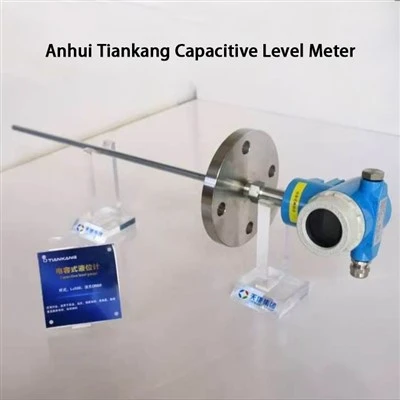
If you’re working on a project and not sure if your current pressure instrument is measuring static pressure correctly, or if you need a reliable, calibrated instrument for your next job, don’t hesitate to reach out to our team for a consultation. We can help you choose the right model, answer technical questions, and provide guidance on installation and calibration to make sure you get the accurate readings you need.
Level Instruments References
- ASME PTC 19.2-2010, Pressure Measurement, American Society of Mechanical Engineers.
- White, F. M. (2016). Fluid Mechanics (8th ed.). McGraw-Hill Education.
- FAA-H-8083-15B, Airplane Flying Handbook, Federal Aviation Administration.
- HVAC Trusted Network. (2022). “Static Pressure Measurement Best Practices for Duct Systems.”
Anhui Tiankang Group Co., Ltd.
As one of the most professional pressure instruments manufacturers and suppliers in China, we’re featured by quality products and good service. Please feel free to wholesale bulk customized pressure instruments made in China here from our factory. Welcome to contact us for pricelist.
Address: No.20, South Renhe Road, Tianchang City, Anhui Province, People’s Republic of China
E-mail: tiankanggroup006@163.com
WebSite: https://www.tkanggroup.com/
