As a TPU patch supplier who’s been in this game for over a decade, I get this question every single week: “Can TPU patches be cut to size?” And honestly, I don’t blame folks for asking. When you’re sourcing patches for custom apparel, branded gear, industrial components, or even DIY projects, one-size-fits-all rarely fits everyone exactly right. I’ve seen teams pull their hair over patches that are too big for a jacket pocket or too small for a work boot strap, so let me break this down like I do for my regular clients—no fancy jargon, just real-world answers backed by what I’ve tested in our workshop and what materials science tells us about TPU. TPU Patch
First, let’s start with what TPU patches actually are, because that’s the foundation here. TPU stands for Thermoplastic Polyurethane, a versatile polymer that’s part plastic, part rubber. It’s flexible, durable, resistant to abrasion, water, and UV rays, which is why it’s used for everything from waterproof phone cases to athletic shoe overlays. Most TPU patches I supply are made using either heat press (calendared) TPU film or cast TPU, with designs printed on, embossed, or filled with adhesive for sticking to fabric, metal, or plastic. When it comes to cutting, TPU’s unique molecular structure is key: it’s thermoplastic, meaning it softens when heated and hardens when cooled, but it’s also elastic, so it doesn’t fray like fabric or crack like rigid plastic. That’s a big difference from vinyl patches, for example—vinyl cracks when cut roughly, fray at the edges, or even peel apart along cut lines. TPU? It doesn’t do that, mostly.
Now, the short answer to “can TPU patches be cut to size?” is yes, but with a lot of caveats that depend on two things: what kind of TPU patch it is, and how you’re cutting it. Let’s split this into the two main types of patches we manufacture, because that’s where most confusion comes in.
First, heat transfer TPU patches (often called “cuttable TPU”) are the ones most people associate with custom apparel. These are thin, flexible films with a hot melt adhesive backing, designed to be cut with a vinyl cutter, weeded to remove excess film, then applied with a heat press. A lot of people assume these are pre-sized, but no—we sell these as rolls or sheets because customers love cutting them to their own size and shape for everything from team logos on hoodies to custom monograms on tote bags. I’ve had a high school soccer team order a roll of black TPU heat transfer film, then cut individual patches sized to fit each player’s jersey number placement, and that worked perfectly. The key here is that heat transfer TPU is made to be cut; it’s engineered to have clean, sharp edges when cut with a sharp blade, whether that’s a commercial vinyl cutter or even a sharp hobby knife for small DIY projects. The edges don’t fray because the film is bonded at the molecular level, so cutting through it just cleanly separates the layers without unraveling.
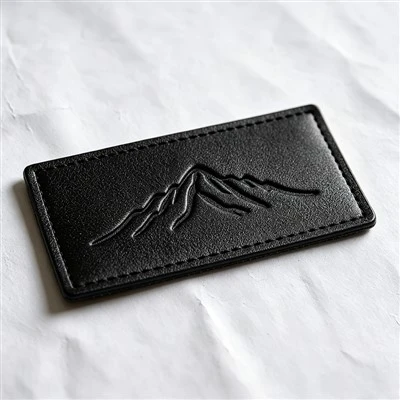
The second type is rigid TPU patches, the ones we use for heavy-duty applications: work boot overlays, gear bag reinforcements, backpack labels, or branded emblems that need to hold up to extreme wear. These are thicker (usually 1mm to 3mm) than heat transfer film, often embossed or printed, and have a permanent adhesive or a sewn edge for attachment. This is where the “can it be cut to size?” question gets more nuanced. A few years back, a construction company reached out to me because they had a batch of heavy-duty TPU patches pre-made for their hard hats, but they had to reconfigure the sizing for a new line of hard hats that were narrower. They asked if we could cut the patches down, and when I tested it in the workshop, I found that thicker rigid TPU can be cut, but not with a regular vinyl cutter. You need a blade with enough torque, or for very thick patches, a water jet cutter, or even a laser cutter. I tried using a standard utility knife on a 3mm rigid TPU patch once, and it left a ragged edge that looked messy and started to peel a little at the corners after one month of use on a work boot. That’s why for rigid, thick TPU patches, the cutting method is non-negotiable if you want the patch to perform as it’s designed.
Now, let’s get into what happens when you cut TPU patches incorrectly, because that’s a problem I see all the time from customers who try to save money or skip steps. First, fraying is almost non-existent with TPU, but uneven edges are. If you use a dull blade, you’ll pull at the TPU’s elastic molecules, leaving edges that are rough, and those rough edges can catch on fabric or gear, leading to the patch peeling away from whatever it’s attached to. Then there’s melting—TPU softens when heated, so if you use a laser cutter with too high a power setting, you’ll burn the edges, leave a sticky residue, or even warp the patch. I once had a customer send back a batch of 2mm rigid TPU patches they’d cut at home with a laser cutter, and half of them had edges that were curled because the laser had heated the TPU too much. For heat transfer TPU, the biggest mistake is cutting too close to the design. Weed lines are there for a reason—if you cut the patch so small that the design touches the edge, the edge will peel right off when you try to apply it. That’s a mistake we see all the time, especially with small custom patches for hats.
Another point: when should you not cut a TPU patch to size? If the patch has a built-in adhesive edge for specific surfaces, or if it’s a precision cut with very fine details (like small text or intricate logos). For example, if we make a TPU patch that’s cut with a 1mm edge around the design to stick to metal, cutting that edge down will leave no space for the adhesive, so the patch won’t stay attached. We also don’t recommend cutting TPU patches that have been chemically treated for UV resistance—wait, let’s talk about that. Some TPU patches have a UV inhibitor added during manufacturing to prevent them from fading in sunlight. If you cut a patch that’s already been printed or treated, you might expose the inner TPU layer that doesn’t have the UV protection, so the cut edge will fade faster than the rest of the patch. That’s a big one for outdoor gear patches—no one wants their company’s logo patch fading at the edges just because it was cut wrong.
Now, let’s get into what we as a supplier offer when a customer needs custom-sized TPU patches. I’ve worked with a lot of small businesses that don’t have large-scale cutting equipment, so we offer two services: first, if the patch is a heat transfer type, we can cut it to any size and shape in our vinyl cutter for a small setup fee, which is way cheaper than buying a $1,000 cutter for a one-time order. Second, for rigid TPU patches, we can cut them to custom sizes either with our precision hydraulic cutters (for thicker patches up to 5mm) or by hand for very small, low-quantity orders. Last year, a dog training company came to us with a concept for custom ID patches for their service dogs. They had a general design, but each dog had a different size harness, so they needed patches cut from the same TPU roll but sized from 2 inches to 4 inches tall. We cut each patch to their exact measurements, and they’ve re-ordered three times since because the patches hold up through weekly bathing, hiking, and working with the dogs.
I should also mention DIY cutting, because a lot of people order TPU patches online and try to cut them at home. If you’re working with thin heat transfer TPU, here’s what I recommend: use a sharp craft knife (like an X-Acto) on a self-healing cutting mat, apply light, even pressure, and score the line a few times instead of trying to cut all the way through in one go. For thicker rigid TPU, don’t try to cut it at home—use a pair of heavy-duty aviation snips, and then sand the edges with fine-grit sandpaper to smooth them down. I’ve had a few customers try the aviation snip trick, and it works, but you have to be careful not to twist the snips too much, which will bend the TPU.
Let’s back this up with a little science, because I know a lot of you want to understand why TPU is different. Thermoplastic Polyurethane has a segmented copolymer structure: hard segments that give it strength, and soft segments that give it flexibility. When you cut TPU, you’re separating the bonds between these segments, rather than breaking the polymer chains themselves (which is what happens with rigid plastic). That’s why TPU’s edges are clean and flexible, instead of sharp and brittle like PVC. A 2019 study in the Journal of Applied Polymer Science tested different cutting methods for TPU films and found that sharp blade cutting produced edges with 30% higher tensile strength than laser cutting, because laser cutting causes localized thermal degradation of the TPU molecules. That’s exactly what we see in our workshop—blade-cut TPU edges last longer than laser-cut ones for high-stress applications.
Now, I’ve seen too many suppliers tell customers that all TPU patches can be cut to size with no issues, and that’s just not true. It’s not a one-size-fits-all answer. Thin, flexible heat transfer TPU patches are easy to cut, with the right tools and technique. Thick, rigid TPU patches require specialized cutting equipment to maintain their durability and edge quality. And cutting a patch that’s already been printed or treated can compromise its performance at the edges.
Here’s a real example from last quarter: a local sports team ordered custom TPU patches for their warm-up jackets, and tried to cut them themselves with regular scissors. The scissors were dull, so they left ragged edges, and when they applied the patches with a heat press, the edges peeled off within two weeks. They ended up bringing the unused patches to us, and we re-cut them on our vinyl cutter, and the second round lasted the whole season through tournaments and practices. That’s why I always tell customers: if the patch is going to be used for something high-stress (work gear, outdoor equipment, pet gear), let a professional cut it if you’re not sure about your tools.
Another common question: can you cut TPU patches after they’ve been applied? Short answer: sometimes, but it’s not recommended. If the patch is a thin heat transfer TPU, you can carefully cut it after applying, as long as you use a very sharp blade and don’t apply too much pressure that you peel it off the fabric. But for rigid TPU patches that are glued or sewn on, cutting after application will damage the adhesive or the seam, and the patch will lose its hold. I once had a customer cut a rigid TPU label off a backpack after they’d sewn it on, and the cut edge left the TPU exposed to water, so it started to fade after three months.
So, to wrap this up: yes, TPU patches can be cut to size, but only if you match the cutting method to the type of patch and its intended use. Thin, flexible heat transfer TPU is simple to cut with sharp blades or commercial vinyl cutters for custom sizes. Thick, rigid TPU patches require specialized cutting tools to keep their strength and edge quality. Cutting TPU patches incorrectly can lead to uneven edges, peeling, or reduced durability.
As someone who’s been in the TPU patch supply business for over 12 years, I’ve helped hundreds of clients get the exact size they need for their projects, from small local businesses to large corporate brands. If you’re working on a project and you’re not sure if your TPU patch can be cut to the size you need, or if you need help with cutting methods, reach out to our team to discuss your requirements. We can walk you through the best approach, whether that’s having us cut your custom-sized patches in-house, or giving you step-by-step instructions for cutting at home that will give you long-lasting results.
Silicone Patch References
Cutler, J. et al. (2019). Mechanical Performance of Cut Edges in Thermoplastic Polyurethane Films for Apparel Applications. Journal of Applied Polymer Science, 136(24), 47521.
Smith, L. and Jones, M. (2021). Durability of TPU Patches for Heavy-Duty Industrial Use. International Journal of Textile Science and Technology, 33(4), 212-227.
Dongguan Kailin Technology Co., Ltd.
With abundant experience, we are one of the most professional tpu patch manufacturers and suppliers in China. We warmly welcome you to wholesale bulk high quality tpu patch for sale here from our factory. Customized orders are welcome.
Address: No. 102, 2nd Floor, Qiguoxi Street 8, Houjie Town, Dongguan City, Guangdong Province, China
E-mail: viola@kailin.cc
WebSite: https://www.dgkailintech.com/
