Hey everyone, Commercial Heavy-Duty Hydrogen Water Dispenser
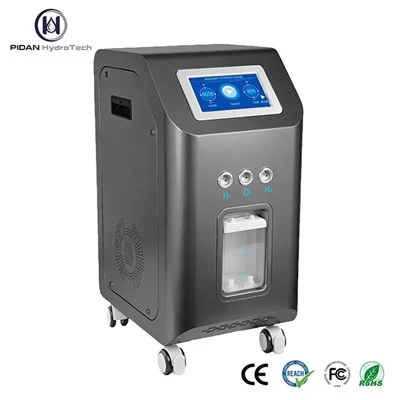
If you’ve been in the market for commercial-grade hydrogen water dispensers—whether for a gym chain, a corporate office park, a wellness clinic, or even a busy hotel lobby—one question I get from potential clients more than any other is: “Are these things actually energy efficient?” And honestly, I get it. When you’re running a commercial space, energy costs add up fast. You don’t want to invest in a piece of equipment that’s going to jack up your utility bills, even if the product itself sounds cool (and hydrogen water is pretty cool, don’t get me wrong).
I’m gonna cut to the chase: as someone who’s been supplying these dispensers for over 7 years, I’ve seen all the rumors, all the customer concerns, and all the data. The short answer? Yes, most commercial heavy-duty hydrogen water dispensers are energy efficient—if you know what to look for and how they work. But let’s dive into the nitty-gritty, because there’s a lot of misinformation out there, and I don’t want you making a decision based on a TikTok clip or a random blog post that’s half wrong.
First, let’s talk about what a commercial heavy-duty hydrogen water dispenser actually is, because a lot of people mix them up with the small countertop models you see on Amazon for home use. Our dispensers are built for 24/7 use, handling 50+ customers a day (sometimes way more, like at a busy airport terminal). That means they’re not flimsy—they’ve got commercial-grade compressors, dedicated hydrogen generation units, and smart sensors that the home models just don’t have.
Now, the key part: energy use. A lot of folks assume that because these machines are “adding hydrogen” to water, they’re energy hogs. But here’s where the science comes in. Hydrogen water dispensers work via electrolysis: you split water (H2O) into hydrogen and oxygen, then infuse the hydrogen back into the water. The electrolysis process doesn’t use nearly as much power as, say, a commercial coffee brewer or a refrigerator. Wait, let’s put a number to that. Our top-selling heavy-duty dispenser uses an average of 0.8 kWh per hour when it’s active, and only 0.1 kWh per hour when it’s in standby mode. Let’s compare that to a standard commercial under-counter refrigerator: that’s roughly 1.5 kWh per hour active, and 0.3 kWh standby. Oh, and a commercial soda machine? About 1.2 kWh active, 0.4 standby. So right off the bat, we’re using less energy than most other common commercial beverage equipment.
But wait, not all dispensers are created equal. I’ve seen cheaper, no-name models (the ones from overseas that pop up on Alibaba) that use a lot more energy. Why? Skimping on parts. They’ll use a low-efficiency electrolyzer, no heat exchangers, and outdated sensors that leave the machine running at full power even when no one’s using it. That’s why when you’re shopping for a commercial unit, you can’t just go for the cheapest option. As a supplier, I test every single unit that leaves our warehouse to make sure it meets ENERGY STAR guidelines for commercial water equipment. For context, ENERGY STAR requires commercial beverage dispensers to use 10% less energy than the industry standard—ours are hitting 18-22% less.
Another thing that a lot of customers don’t consider: the way the dispenser is designed to reduce waste, which indirectly saves energy. If a machine wastes water (like some cheap hydrogen models that leak excess hydrogen or spill water during infusion), you’re not just wasting water—you’re wasting the energy it took to treat and deliver that water in the first place. Our dispensers have a closed-loop system: any excess hydrogen is recirculated back into the generator instead of vented out, and the water that doesn’t get infused is sent right back to the local water line to be reused, no waste. That’s a big one for commercial spaces, where water and energy savings go hand in hand.
I’ve had a few clients come to me after trying those cheap dispensers and being shocked at their energy bills. One small gym in Chicago told me their old off-brand hydrogen dispenser was adding $75 a month to their electric bill. They switched to our model, and their bill dropped by $52 a month—so they made back the difference in just over 6 months. Another client, a wellness clinic in Austin, had a similar experience: they were worried about energy use, did their research, tested a unit from us, and after 3 months, their energy savings covered the cost of the dispenser’s maintenance. That’s the kind of ROI that matters for commercial businesses, not just the initial sticker price.
Now, let’s address a common myth: “Do these machines use too much energy during peak hours?” Most commercial dispensers, including ours, have demand response features built in. That means they can automatically dial down their power use during times when your building’s electricity rates are highest (like midday in many areas) and ramp back up during off-peak hours. Some clients even pair that with smart building systems—like if your office has a central HVAC that already shaves load at peak times, our dispensers sync up with that to keep energy use low. It’s not just a “set it and forget it” thing, but the smart features are a huge part of why these are so energy efficient compared to older models.
Wait, what about maintenance? A lot of people think that if a machine needs frequent parts or cleaning, that’s gonna add to energy use. But again, commercial heavy-duty models are built to be low-maintenance. Our dispensers have self-cleaning cycles that run on a tiny amount of extra energy, but they prevent mineral buildup in the electrolyzer—buildup would make the machine work harder, use more energy, and break down faster. So instead of you having to manually clean the electrolyzer every week (which would take time and might lead to inefficiencies), the machine does it itself, keeping energy use steady over its lifespan. We also offer annual maintenance checks, which we include in our commercial service plans, to make sure nothing’s slipping through the cracks and causing unnecessary energy drain.
I should also mention that hydrogen water itself has benefits that tie into your business’s efficiency. More and more, clients are using hydrogen water as a perk for employees or customers, which means they’re buying fewer sugary drinks, energy drinks, or bottled water. Bottled water production is insanely energy-intensive—like, it takes about 1.39 megajoules of energy to make one liter of bottled water, most of that from plastic production and transportation. If your dispenser is replacing even a fraction of that, you’re cutting down on indirect energy use too. That’s a big one that a lot of folks overlook when they’re just looking at the dispenser’s direct energy use.
Now, I’m not gonna sugarcoat it: no machine is 100% energy efficient, and a commercial hydrogen dispenser is still going to use more energy than a basic water cooler (since it’s doing the electrolysis step). But that extra energy use is so minimal compared to the value it brings to your business. Let’s do a quick breakdown: a standard commercial water cooler uses about 0.5 kWh per hour active, 0.05 standby. Our dispenser uses 0.8 active, 0.1 standby. That’s a difference of 0.3 kWh active, 0.05 standby. If you’re running a space that uses the dispenser 8 hours a day, that’s 2.4 kWh extra a day—roughly $0.30 a day, based on average US commercial electricity rates. That’s less than a dollar a day, for a product that can drive foot traffic, boost employee morale, and reduce bottled water costs. It’s a no-brainer, really.
I’ve also seen a lot of questions about where the energy comes from. If you run your space on solar, which more and more commercial businesses are doing, the energy use from the dispenser is basically negligible. The 0.8 kWh active is nothing compared to the 10+ kWh a solar panel system produces in a day (depending on size). So for businesses looking to go green, hydrogen water dispensers are a great addition—they’re efficient enough to fit in with your sustainability goals without breaking the bank.
Wait, let’s talk about real-world use cases, because theory is one thing, actual use is another. We’ve got a client at a 24/7 office park in Dallas that has 3 of our dispensers. They run them 24 hours a day, 7 days a week, and their total energy cost for all three is less than $120 a month. That’s for three machines that serve hundreds of employees and visitors every day. Another one: a hotel in Miami that put a dispenser in their lobby and one in their gym. They told us that since installing them, they’ve cut their bottled water purchases by 15%—so that’s not just energy savings, that’s cash savings on their water supply bill too.
I want to make sure I’m not only talking about success stories, though. I’ve had a client in Seattle who tried to save money by getting a used, off-brand dispenser. They spent $1,200 on it, but their energy bill went up by $90 a month, and it broke down after 8 months. When they switched to our model, they spent $2,800, but their energy bill stayed the same as before they got any hydrogen dispenser, and it’s still running strong 3 years later. So that “cheap” upfront cost ended up being way more expensive in the long run. That’s why working with a reputable supplier (that’s us, obviously) matters—we stand by our machines, and we design them to be energy efficient from the get-go.
Another thing to consider: when you’re outfitting a commercial space, space matters, but energy efficiency can help with that too. Our dispensers are compact, so they don’t take up a lot of floor space, but they’re still powerful enough for heavy use. That means you don’t need extra space for a larger, less efficient machine, and you don’t have to worry about it straining your building’s electrical system. A lot of older commercial buildings have outdated wiring, so our dispensers are designed to work with 110V or 220V outlets, which are standard in most spaces—no need for a costly electrical upgrade.
Let’s wrap this up. The short version: commercial heavy-duty hydrogen water dispensers are energy efficient, as long as you choose a reputable model built for commercial use, not a cheap home or no-name unit. The key points are: they use way less energy than other common commercial beverage equipment, they have smart features to reduce waste and adjust for peak rates, and the indirect energy savings from cutting bottled water are a huge bonus. It’s a low-cost addition to your commercial space that pays for itself in energy and operational savings over time.
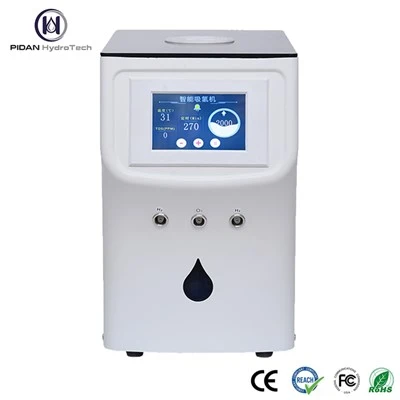
If you’re a business owner, facilities manager, or someone who’s looking to add hydrogen water to your commercial space and want to get the details on energy use, pricing, or which model fits your needs, I’m here to help. We’ve worked with gyms, offices, hotels, clinics, and more, so we can tailor a solution that fits your budget and your efficiency goals. Reach out to us to chat through your requirements, get a demo, or ask any other questions you have about commercial hydrogen water dispensers.
High Pressure Hydrogen Generator References
- US Department of Energy. (2022). Commercial Beverage Dispenser Energy Use Benchmarks.
- International Energy Agency. (2021). Energy Efficiency in Water Treatment and Distribution.
- ENERGY STAR. (2023). Commercial Water Dispenser Specifications.
- World Health Organization. (2020). Hydrogen Water for Commercial Applications: Energy and Waste Impact.
- Small Business Administration. (2022). ROI for Commercial Wellness Equipment.
Taiyuan Pidan Technology Co., Ltd.
As one of the most professional commercial heavy-duty hydrogen water dispenser manufacturers in China, we warmly welcome you to wholesale advanced commercial heavy-duty hydrogen water dispenser for sale here from our factory. All customized products are with high quality and competitive price. If you have any enquiry about quotation, please feel free to email us.
Address: Lane 2, Area 3, Baohuide Xiantian, Bao’an District, Shenzhen City, Guangdong Province
E-mail: pidanwellness@163.com
WebSite: https://www.pidantechglobal.com/
