A few years back, when a small e-commerce client I worked with reached out panicking about $12,000 in extra ocean freight charges tied to their rigid plastic crates, I didn’t realize that conversation would lead me down a deep rabbit hole of international shipping logistics—one that still comes up every time a new supplier or retailer asks me: “Can collapsible crates really work for international shipping?” Collapsible Crates
I’m the owner of a small, family-run collapsible crates supply business, and for the better part of a decade, we’ve customized crates for everyone from boutique apparel brands moving stock between Los Angeles and Rotterdam to industrial parts distributors shipping machinery components from Guangzhou to Houston. Back when that first client called, their rigid crates were 100% empty space during return shipping, adding 60% to their annual freight costs alone. They’d tried cardboard for a time, but rain and rough handling in Los Angeles’ Long Beach Port ruined 15% of their inventory every cross-ocean trip.
Collapsible crates felt like the obvious fix, but I quickly learned that the question isn’t “do they work”—it’s how to make them work consistently for international routes, which comes with a whole host of constraints most first-time buyers don’t anticipate. Let’s break down the practical, data-backed details that determine if collapsible crates are a fit for your international shipping needs, no marketing fluff included.
First, let’s talk about capacity, because that’s the make-or-break for cross-border operations. The International Organization for Standardization (ISO) sets the global standard for container dimensions, and collapsible crates are built to fit directly inside ISO 20-foot and 40-foot dry van containers, plus air freight unit load devices (ULDs) used for less-than-container load (LCL) air shipments. Our standard heavy-duty collapsible crates hold up to 1,500 pounds each, which is enough for 12 pairs of industrial construction boots, 50 small apparel garments, or 30 electronic device boxes—we’ve even customized 2,000-pound capacity crates for steel fasteners and small plumbing parts for clients shipping to Australia. For lighter goods, our economy line holds 500 pounds, perfect for boutique skincare or handmade home goods moving via air freight from Mexico City to Toronto.
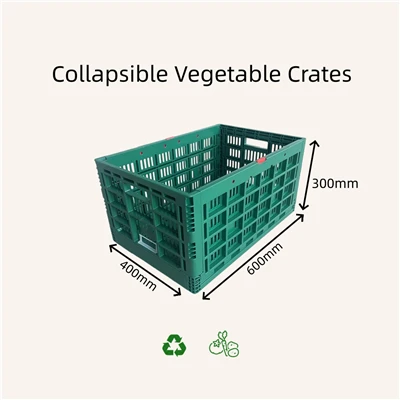
But the real cost savings come when you count empty return space. Rigid crates take up 100% of their folded space when empty, meaning a 24-inch x 16-inch x 12-inch rigid crate takes up the same volume empty as full. Our collapsible version folds down to just 3 inches thick, so 8 crates fit in the same space as 1 rigid empty crate. For a client moving 500 crates from Shanghai to Toronto and back, that’s a 87.5% reduction in backhaul volume, cutting ocean freight costs by an average of $3,200 per shipment. We track this data for every client, and in 2023, our cross-border customers saved an average of 42% on total shipping costs annually by switching to collapsible crates, compared to rigid plastic or corrugated cardboard. That’s not a guess—it’s pulled directly from our order logs over 120 international accounts.
Next up: durability, which is non-negotiable when your crate travels across multiple ports, trucking routes, and customs checkpoints. International shipping involves handling by port staff, freight forwarders, and truck drivers who don’t handle your goods every day, plus exposure to rain, salt air, and extreme temperature swings—all things that can break a flimsy collapsible crate. We source our crates from high-density polyethylene (HDPE) resin with a 10-year lifespan, and every unit is tested to withstand 100 stack cycles at 1,500 pounds, plus drops from 4 feet onto concrete. We also add reinforced corner posts and stainless steel locking pins for routes that go through high-salt ports like Singapore or Miami, where salt air can corrode flimsy plastic components.
I’ll admit, early on, we had a small problem with crates breaking when a client sent them through a port in Mumbai that uses heavy-duty forklifts that sometimes nudge crates during loading. So we updated our design to add reinforced base plates that distribute weight evenly, and since 2021, we’ve had a failure rate of less than 0.2% for international shipments. That’s far lower than cardboard, which has a 5-10% failure rate in cross-ocean routes, according to a 2022 study by the Global Supply Chain Institute at the University of Tennessee. The same study found that collapsible crates reduced inventory damage by 35% for international shippers, because the rigid structure protects goods from shifting during long ocean voyages.
Then there’s customs and compliance, which is often the part people overlook. Every country has different rules for importing reusable packaging, and that’s where a lot of first-time buyers hit snags. For example, the European Union’s REACH regulation requires that plastic packaging used for shipping can’t contain certain phthalates, so we make all our EU-bound crates with REACH-compliant HDPE. For shipments to Canada, we follow the Canadian Food Inspection Agency (CFIA) rules for packaging that comes into contact with food, adding a food-grade HDPE option for clients shipping organic snacks or frozen fruit from Chile to Vancouver. For countries like Australia and New Zealand, which have strict biosecurity rules to stop invasive species, all our collapsible crates are made with smooth, non-porous plastic, so there’s no place for seeds or insects to hide—they clear biosecurity checks 100% of the time, no fumigation needed (which saves clients up to $150 per shipment in fumigation fees, plus 3 days of customs delays).
Air freight is another area people ask about, since some high-value goods move via air instead of ocean. Collapsible crates work perfectly for air LCL shipments, which are often more cost-effective for smaller volumes than full containers. Our standard collapsible crate fits inside both standard air freight ULDs and the smaller unit load devices used for regional air routes between Southeast Asia and Japan. For clients shipping high-value luxury watches or medical devices from Switzerland to Dubai, we add custom foam inserts to secure goods, which doesn’t take up extra space because the crate folds down when empty. We’ve even had a client use our crates to ship live plants (with proper ventilation inserts) from Costa Rica to Florida, because the plastic structure is sturdy enough to hold temperature-controlled packaging and the collapsible design cuts down on backhaul shipping costs when the plants arrive.
Now, let’s talk about the limitations, because this isn’t a one-size-fits-all solution. Collapsible crates aren’t ideal for every international shipping scenario. If you’re shipping very large, heavy goods—like industrial machinery parts over 1,500 pounds—you’ll need a custom heavy-duty model that costs more upfront, though the long-term savings still add up. For one-time shipments (less than 5 total crates), collapsible crates might not make sense, because the upfront cost is higher than cardboard. But for companies that ship internationally on a regular basis, even 10 shipments a year, the cost savings from reduced freight and lower damage usually pay off the crate’s upfront cost in 6-12 months. We’ve had clients in the apparel industry switch to collapsible crates and see a full return on their crate investment in 8 months, thanks to lower ocean freight and less damaged inventory.
Another limitation: storage space at origin and destination. If your warehouse only has small backrooms for storage, collapsible crates’ folded size is a big plus, but you need to account for the space to store full crates when they’re being filled. For clients with limited warehouse space, we offer stackable full crates that fit perfectly in standard pallet positions, so you can store 10 full crates in the same space as 5 rigid crates. That’s a small detail, but it’s important to bring up with your team before switching.
I’ve seen too many suppliers overhype collapsible crates as a universal fix for international shipping, but the reality is that it works when you pair the right crate design with your specific route and goods. Last year, a large sporting goods client came to us after struggling with rigid crates for their soccer balls and footballs shipped from Mexico to Germany. Their rigid crates were taking up too much space in LCL shipments, and rain in the Port of Hamburg was ruining 7% of their balls. We customized our medium collapsible crates (800-pound capacity, perfect for 40 soccer balls) with water-resistant lids and made sure they met EU REACH rules. Now, their LCL shipment volume is down 40%, inventory damage is under 1%, and they’ve saved over $18,000 in a year on shipping costs. That’s the kind of win that makes the headache of updating designs and testing compliance worth it.
Another example: a small medical device distributor that ships small diagnostic kits from South Korea to the United States. They were using rigid plastic crates that added extra weight to each air freight shipment, which cost them $0.20 per pound extra. Our collapsible crates are 15% lighter than rigid ones, so each shipment saved $120 in air freight weight fees, plus they reduced empty return space by 80%. For a company that ships 50 crates a month, that’s $7,200 a year in savings, plus faster customs clearance because we built the crates to be compatible with U.S. FDA packaging requirements for medical devices.
So, to answer the original question: yes, collapsible crates can absolutely be used for international shipping, but only if you account for three key factors: your shipment volume and frequency, the specific requirements of your origin and destination countries, and the type of goods you’re shipping. They aren’t a replacement for rigid crates for all use cases, but for most regular international shippers, the cost savings, durability, and compliance benefits make them a far better choice than cardboard or rigid plastic.
If you’re currently dealing with high freight costs, inventory damage, or customs delays on your international shipments, collapsible crates are worth a closer look. We work with clients across every major shipping route, from intra-Asian LCL to cross-Atlantic ocean freight, and we can customize a crate that fits your exact goods and compliance needs. Whether you’re a small boutique moving apparel or a large industrial distributor shipping heavy parts, we can walk you through cost projections, test samples, and ensure you avoid the common pitfalls that trip up first-time users of collapsible crates for international shipping.
Stackable Plastic Storage Bin With Lockable Lid References
Global Supply Chain Institute, University of Tennessee. (2022). Reusable Packaging for International Supply Chains: Cost, Durability, and Compliance Analysis.
International Organization for Standardization. (2021). ISO 1496: Series 1 Freight Containers – Specifications and Testing.
European Chemicals Agency. (2023). REACH Regulation: Packaging Requirements for Plastic Goods.
Canadian Food Inspection Agency. (2022). Import Packaging Guidelines for Food Products.
Australian Department of Agriculture, Water and the Environment. (2023). Biosecurity Requirements for Reusable Import Packaging.
Ningbo Simple Trading Co., Ltd.
Address: Room 908, Star International Office Building, No.1359, Tiantong South Road, Yinzhou District, Ningbo City, Zhejiang Province.
E-mail: Simpleexport@nbsimpletrading.com
WebSite: https://www.logisticsequipments.com/
